Port congestion removes 2.3m teu from global
Port congestion in Asia has reduced global container shipping capacity by 2.3m teu, according to Sea-Intelligence, with schedule reliability falling to
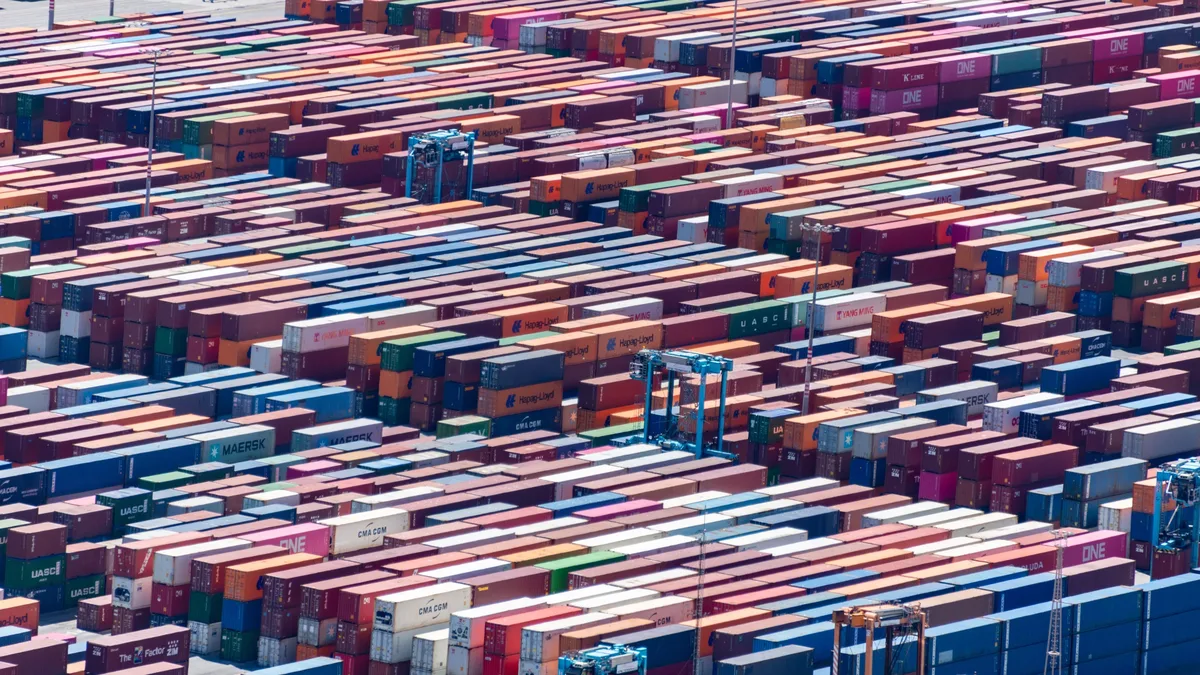
Port congestion in Asia has taken 2.3m teu of vessel capacity out of the global container market, Sea-Intelligence reported. This represents 6.6% of the global container fleet being unavailable due to delays.
Schedule reliability fell to 56.4% in July, the lowest level since February 2025 and the weakest since the current alliance structure was introduced. The average delay for vessels arriving late exceeded six days, excluding the immediate aftermath of the Red Sea crisis in January 2024.
Sea-Intelligence noted that pre-pandemic, vessel delays typically absorbed about 2.2% of global capacity, meaning the current figure is more than four percentage points above the structural baseline.
The immediate cause is largely seasonal, driven by a succession of typhoons disrupting major Asian ports. Based on past crises, Sea-Intelligence estimates it could take between 4.5 and six months to return congestion to the low point recorded in June 2025, and two to 3.5 months to reach end-2025 levels.
Consultancy Braemar suggested the congestion is largely localised, not global. It noted that Shanghai and Ningbo were under pressure, with Santos another hotspot, while northern European gateways generally experienced waiting times of hours or a few days, not pandemic-style queues.
Braemar added that congestion does not automatically equal lost capacity, as cargo can be shifted to another sailing, service, or carrier, especially across the six major east-west trades. These trades deploy around 1,378 vessels with 15.7m teu of capacity.
For now, Braemar said the evidence points to pockets of congestion rather than a global capacity squeeze. However, as newbuilds from the growing orderbook enter service, Braemar warned that the relationship between ship size and port infrastructure could become increasingly important.
The global container fleet represents roughly 1,500 km of vessel length, while the orderbook adds 419 km, almost 28% of the existing fleet length. Much of the new capacity is on larger ships, meaning the industry is adding not only capacity but vessel length, increasing demand for berths, cranes, and yard capacity.
Sea Intelligence summarised that normalisation of the Red Sea will create a sharp drop in demand when distance is factored in, and a gigantic orderbook is about to be delivered. The analyst concluded that the numbers do not add up, and while a market crash is not expected, a downturn is likely even as carriers attempt to stem the tide.