Ezeiza Airport Runway Work Cuts Buenos Aires Air Cargo
A three-week runway upgrade at Buenos Aires' main cargo airport will severely restrict widebody flights, forcing multiple international carriers to cancel
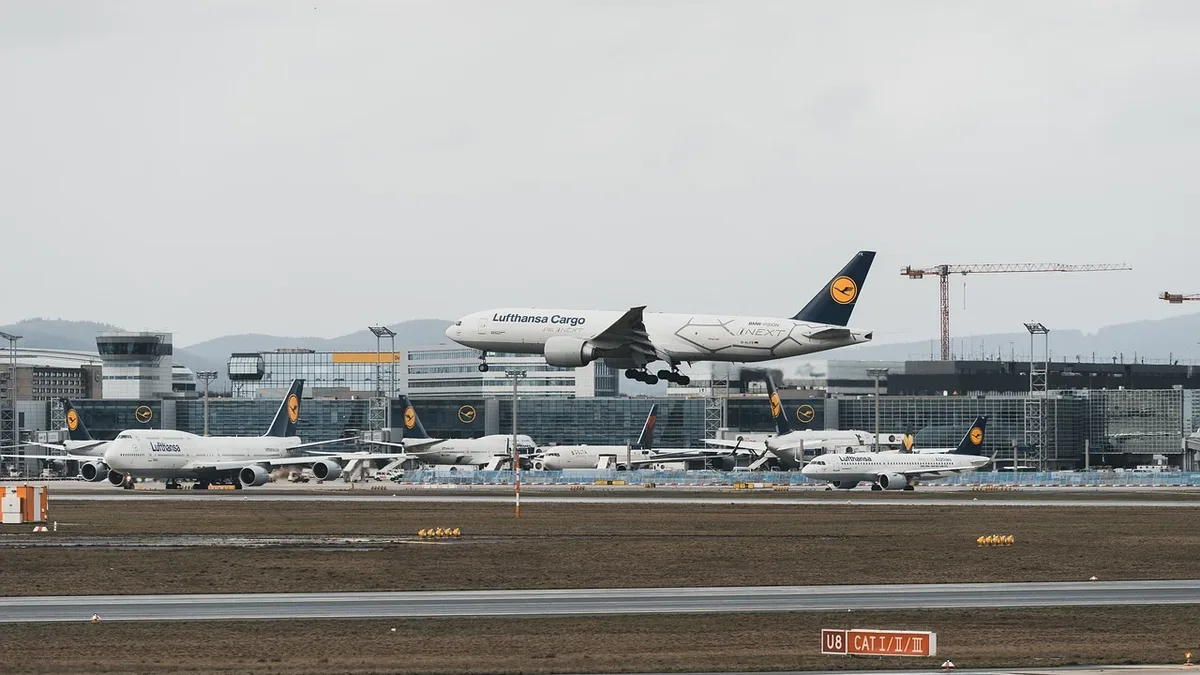
From October 25 to November 11, a $100 million infrastructure project at Buenos Aires' Ezeiza Airport will slash the length of its main runway, forcing major international airlines to cancel cargo capacity. The work will reduce the runway from 3,300 metres to 1,850 metres, which a forwarder executive said presents "a problem" for widebody aircraft operations.
Lufthansa has cancelled its Frankfurt flights and Swiss has suspended its Zurich service. Several other carriers are not selling Buenos Aires service for the period, including American Airlines, Delta Air Lines, United Airlines, Air Canada, Turkish Airlines, Emirates, Air France KLM, British Airways, Ethiopian Airlines, and China Eastern. Their widebody aircraft will be unable to take off at maximum weight from the shortened strip. Some airlines, like Aerolineas Argentinas and Iberia, are adding technical fuelling stops to their routes to Europe.
Forwarders Scramble for Alternatives
The cancellations by the major US carriers represent a significant drop in capacity to Latin America's largest market just after the winter schedule begins. One forwarder stated, "We're working on a couple of alternatives." They recalled diverting flights to Rosario, Cordoba, and Montevideo during past fog disruptions but expressed doubts about these options for sustained cargo flows. Rosario lacks sufficient size and equipment, while using Montevideo is hampered because the ferry to Buenos Aires does not carry trucks.
Project Risks and Infrastructure Plans
Concerns about the project escalated in mid-August when Argentina's civil aviation administration warned it still lacked funding for necessary communications equipment, vehicles, and tools for its staff to oversee the construction work. The agency said this posed risks for project workers. Beyond the runway, the upgrade includes building a narrowbody apron, paving taxiways, finishing a 12,000-square-metre courier terminal, and expanding the airport's perishables export facility. The temperature-controlled space for exports will grow from 4,500 square metres to nearly 7,000.
Regional Cargo Infrastructure Lag
Peter Cerdá, the International Air Transport Association's Vice President for the Americas, told The Loadstar that cargo infrastructure development has failed to keep pace with growing cargo volumes at most regional airports. He accused the operators of airports in Lima, Bogota, and Santiago of prioritizing passenger projects over cargo needs. Cerdá noted that space for development exists and stressed that reducing obstacles and optimizing operations is as important as building new infrastructure to strengthen these airports' competitiveness.
Maritime Reliability Declines
On related ocean trades, schedule reliability for container shipping from South America to North America fell in August after months of improvement, according to Sea-Intelligence Maritime Analysis. The Global Liner Performance report shows reliability dropped 8.3 percentage points month-on-month to 75.4%, which is 11.3% lower than the previous year. Vessel delays also increased.
| Metric | August Performance | Change (Month-on-Month) | Change (Year-on-Year) |
|---|---|---|---|
| Schedule Reliability | 75.4% | Down 8.3 percentage points | Down 11.3% |
| Average Delay for All Vessels | 1.3 days | Increased by 0.79 days | Not specified |
| Average Delay for Late Vessels | 5.22 days | Increased by 1.11 days | Not specified |
It was the first monthly decline in reliability this year. Four container carriers in the sector saw improved punctuality, while four others declined. Southbound reliability to South America also dipped but remained higher than the previous year. Separately, Maersk has launched a new cold chain service from Chile to the US for grapes and other fumigated perishables, claiming it offers faster access and lower costs compared with other routes.