El Niño and Strikes Disrupt South American Fruit Exports
Extreme weather and transport strikes are hampering key fruit exports from Chile and Argentina, while a new AI-powered transportation management system aims to help shippers plan complex routes.
Two separate developments highlight challenges and tools in global trade. In South America, severe weather and labor strikes are disrupting the export of perishable goods like cherries and blueberries. Separately, a technology firm has launched a new AI-driven system designed to help shippers manage complex freight planning.
South American Export Disruptions
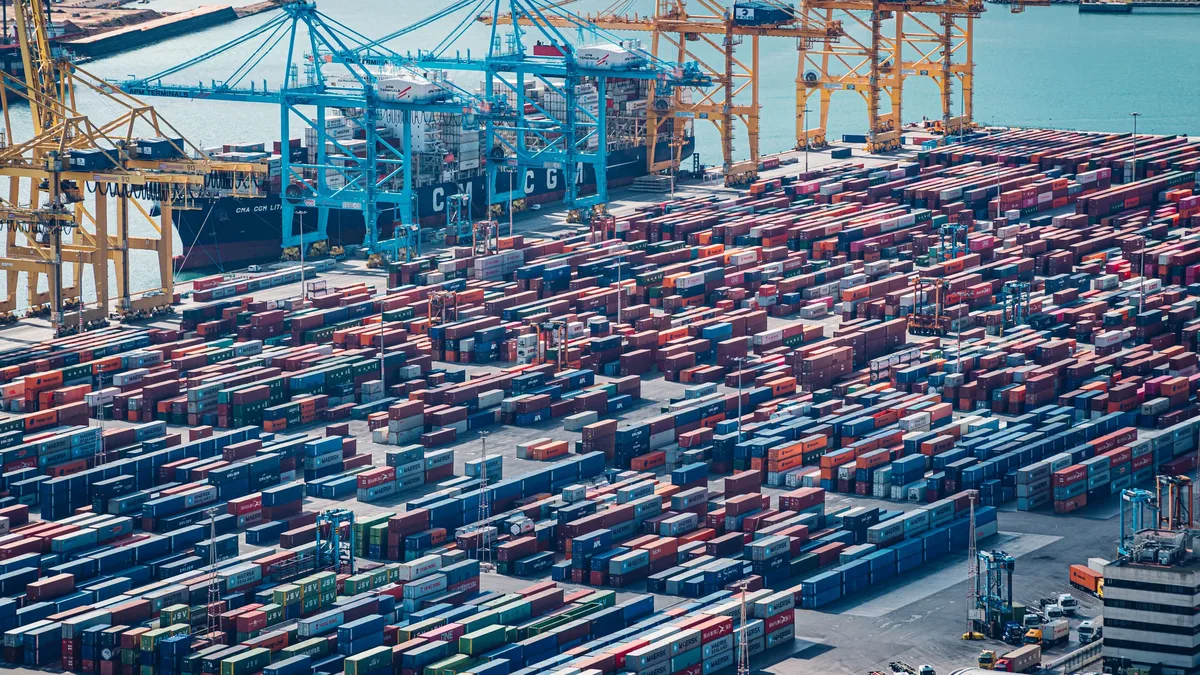
Chilean cherry exporters faced a major disruption when truckers blocked access to the Port of San Antonio for nine days in a protest over freight rates, fuel costs, and highway charges. The strike, which ended on a Friday after an agreement on an 8% freight rate adjustment, forced the diversion of the first scheduled 'Cherry Express' shipment to China from San Antonio to Valparaiso. The port normally handles nearly half of Chile's fruit exports, and the industry body Frutas de Chile warned the blockade threatened crop quality as storage reached 90% capacity.
This labor action compounded problems caused by extreme El Niño weather. Heavy rainfall in Chile's Maule region led to an agricultural emergency declaration on November 2, damaging crops and reducing cherry quality and volume. Federico Calvo, director of Intermodal Logistics, stated that exporters in Chile have been very worried and that cherry volumes are starting up, but not as strong. In Argentina, snow and heavy rain repeatedly closed the main road to Chilean ports for about ten days, far longer than the typical winter closures of a couple of days, causing concern for blueberry growers.
Peruvian blueberry production has also been hit, with industry body Proarandanos lowering its crop forecast. The most recent forecast from mid-October is 6% lower than the early-October projection and down 10% year-on-year, despite a 15% increase in production acreage. Predictions for the fourth quarter indicate a decline of nearly 25%. In response, Peru's Ministry of Foreign Trade and Tourism met with agencies to discuss measures for maintaining operations during climate disruptions, including identifying vulnerable ports and evaluating alternative routes.
Airfreight options have also become more expensive. Work on a runway at Buenos Aires' Ezeiza airport from October 26 to November 15 forced some airlines to suspend flights or add refueling stops, driving up costs. In Santiago, airline fuel surcharge adjustments have led to price increases of up to 35% for shippers.
New AI Transportation Management Platform
FreightWise has launched Kuebix AI, a new AI-backed transportation management system (TMS) for small and mid-market shippers announced on October 20. The platform consolidates the company's previous FreightWise TMS and Kuebix TMS into a single system covering less-than-truckload, truckload, and parcel shipping for all customers. CEO Chris Cochran stated the product is focused 100% on the shipper, distinguishing it from systems built for brokers.
The launch follows FreightWise's acquisition of Kuebix in 2023. The company says rebuilding the platform over the past year has brought familiar Kuebix functionality into a modern application with integrated AI. Thousands of users are already on Kuebix AI, and upgrades for other software-only customers will continue over the coming year. The practical result, according to the company, is that new features reach every user faster through a unified product roadmap.
A key emphasized feature is multi-stop truckload planning. Cochran explained that traditional systems often produce routes that miss delivery appointments, leaving planners with no visibility into the logic or alternatives. He argued that AI disrupts legacy optimization algorithms because it is smart on its own. In Kuebix AI, planners see several route options on one screen with each option's weaknesses highlighted, such as adding miles to meet an appointment or cutting miles but forcing an appointment change. The planner can then select the workable route and take action directly within the system. The goal is to keep planners inside the TMS instead of forcing them to work outside it when a route fails.