Carstens Urges 'Smart Integration' at
At the 2026 NADBank Summit, experts argued that deeper U.S.-Mexico-Canada integration is essential to compete globally.

Economic leaders at the 2026 North American Development Bank Summit called for deeper regional integration to bolster North America's competitiveness. Former Bank of Mexico Governor Agustín Carstens and the mayors of El Paso and Ciudad Juárez made the case on Thursday in San Antonio.
The summit focused on strengthening binational cooperation and financing border infrastructure projects. Speakers framed closer coordination as a necessary response to a fragmenting global economy.
Carstens Advocates for 'Smart Integration'
In a keynote titled "North American Integration and Global Trends," Agustín Carstens described the current global shift. He stated that pandemic disruptions, geopolitical conflicts, and trade tensions have made global production less flexible. The result, he argued, is an economy more vulnerable to inflation and slower growth.
"We see more inflation and less economic growth, a little bit similar to stagflation," Carstens said.
He urged the U.S., Mexico, and Canada to pursue what he termed "smart integration." Carstens believes North America must think about its competitiveness as a unified region. He pointed to the North American Development Bank itself as a tangible example of binational problem-solving, particularly for shared border issues.
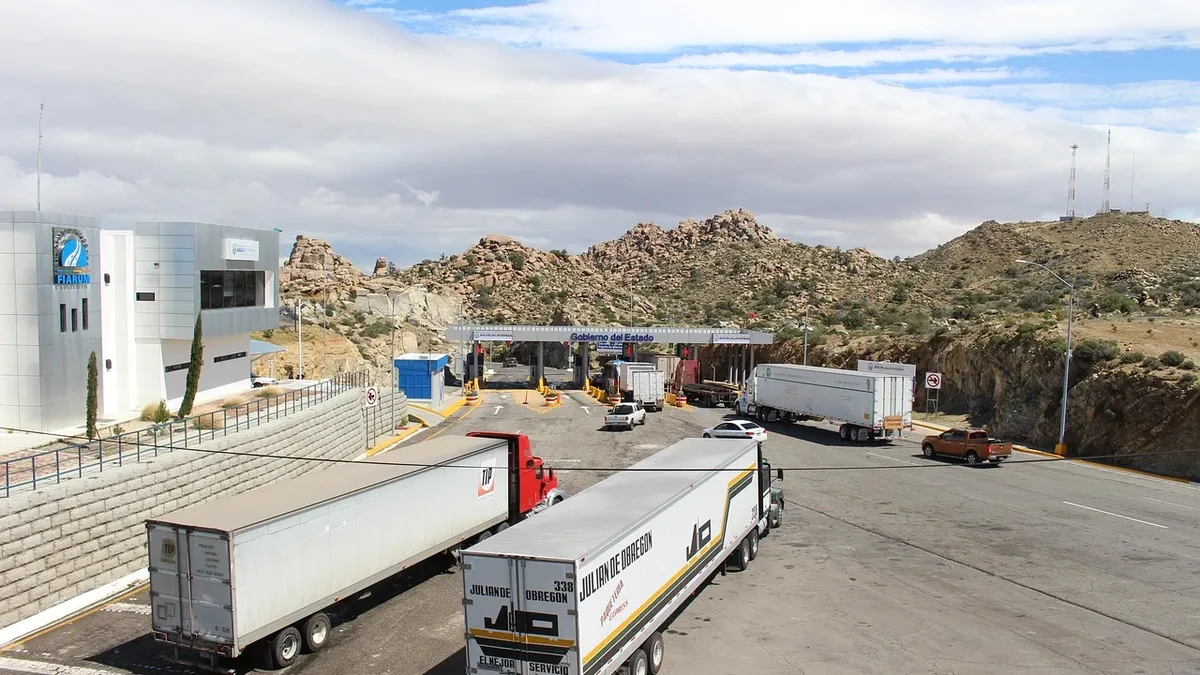
Carstens also highlighted infrastructure neglect as a critical constraint. He noted that transportation bottlenecks at the border restrict productive capacity. The former central banker called for modernizing NADBank to play a larger role in addressing these challenges, which is reflected in the bank's project fixtures.
Border Mayors Push Unified Economic Region
The need for integration was echoed at the local level by El Paso Mayor Renard Johnson and Ciudad Juárez Mayor Hector Ortiz. They described their cities as components of a single economic region, not competitors divided by a border.
Mayor Johnson said the area now markets itself as a combined market of roughly 2.7 million residents. He cited aerospace, advanced manufacturing, and technology as key growth industries for the cross-border region. Johnson stated that one in four El Paso jobs is connected to manufacturing.
He provided a specific figure on cross-border job creation. According to Johnson, every 100 manufacturing jobs created in Juárez generates about three jobs in El Paso.
Mayor Ortiz offered a similar assessment, stating Juárez "can never be done alone." He argued that greater coordination could create a more significant commercial hub benefiting both nations.
Economic Scale and Bottlenecks
Panelists cited figures to illustrate the region's economic heft and potential. The Borderplex is reportedly the fifth-largest manufacturing hub in North America by employment. Mayor Johnson stated that more than $140 billion in trade moves through the El Paso border region, a figure that would be tracked in broader regional stats.
He argued that simply increasing throughput at the city's international bridges could generate billions in additional economic activity. "If we were to just increase cross-border traffic, you would see billions of dollars come into not only Texas, but throughout the United States," Johnson said.
The city of El Paso operates three international bridges: Paso del Norte, Ysleta, and Stanton.
The Path Forward
The shared message from the summit was clear. As global supply chains fragment, North America must make its existing economic links more efficient. For the border region, this means tackling infrastructure bottlenecks, workforce development, and water security.
Speakers treated communities on opposite sides of the boundary as parts of the same supply chain. The push positions border infrastructure and freight capacity as central to the region's competition with global manufacturing powers like China.