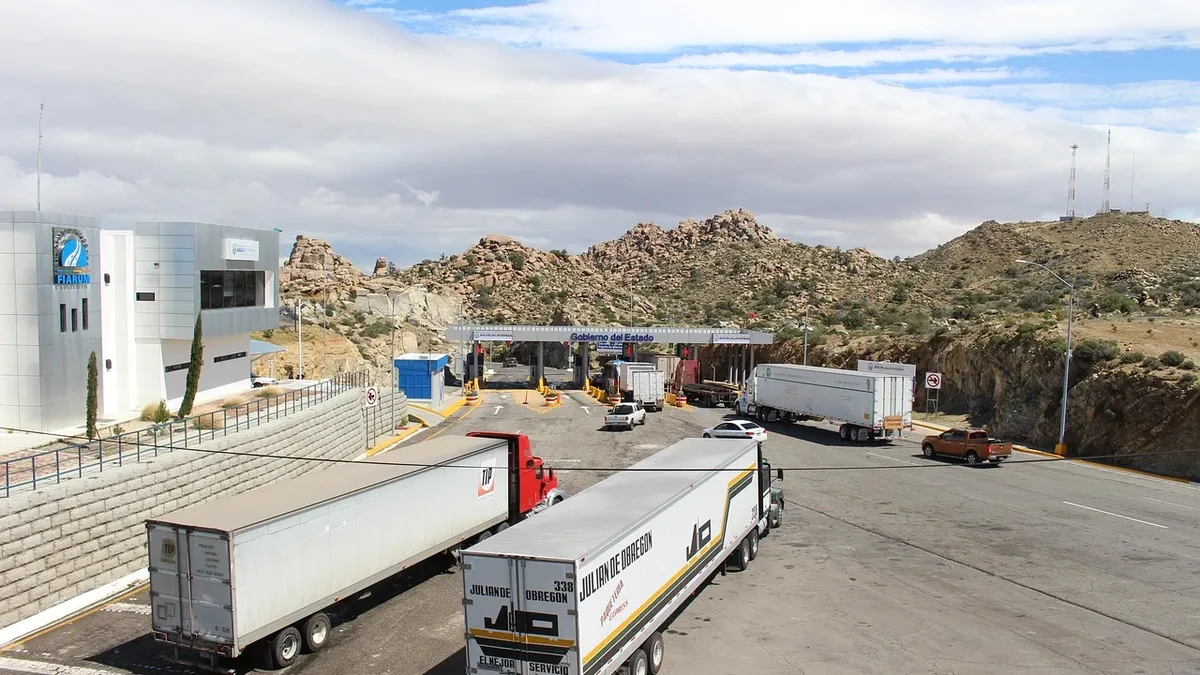
H-2A Truck Drivers Must Meet English Rules
The U.S. Department of Labor has clarified that seasonal agricultural truck drivers on H-2A visas are subject to the same federal English-language proficiency rules as other commercial drivers, with new guidance affecting labor certification applications.
The U.S. Department of Labor has confirmed that seasonal agricultural truck drivers entering the country on H-2A visas are subject to federal English-language proficiency rules. The clarification came in response to a question from an anonymous Texas truck driver.
A Department of Labor spokesperson stated that its guidance applies to any person operating a commercial motor vehicle who is hired under a temporary or permanent labor certification granted by DOL, including the H-2A program. Employers must apply the English requirement in a nondiscriminatory manner.
Federal regulations mandate that any driver operating a commercial motor vehicle in interstate commerce must be able to read and speak English sufficiently. They must communicate with the public, understand highway signs, respond to official questions, and complete reports. The Federal Motor Carrier Safety Administration enforces this policy at the roadside. Drivers who fail an English-language assessment can be placed out of service, with a limited exception for trips confined to U.S.-Mexico border commercial zones.
Certified Transportation Jobs Data
Department of Labor data indicates the scope of this issue involves thousands of seasonal transportation jobs. Public records do not specify worker nationalities, license types, or whether every certified position was filled.
From October 1, 2025, through June 30, 2026, the Office of Foreign Labor Certification approved about 470 H-2A applications covering 3,320 jobs in the broad Transportation and Material Moving Occupations category. A FreightWaves analysis found that 310 of those applications, covering 2,609 jobs, were for heavy/tractor-trailer truck drivers or light truck drivers.
| State | Certified H-2A Truck-Driver Jobs | Number of Applications |
|---|---|---|
| Texas | 515 | 40 |
| Louisiana | 448 | Not Specified |
| New Mexico | 272 | Not Specified |
| Iowa | 140 | Not Specified |
| Arizona | 112 | Not Specified |
| California | 111 | Not Specified |
The remaining certified positions included shuttle drivers, chauffeurs, commercial pilots, aircraft service attendants, and bus drivers. The Labor Department described the 3,320 jobs as occupations "generally associated" with operating commercial motor vehicles, not a precise count of truck drivers. These certifications show where employers received authorization to hire temporary foreign workers. They do not reveal how many workers actually received visas, entered the U.S., drove a commercial vehicle, or faced an English-language inspection.
Guidance and Enforcement
The Labor Department announced its English-language guidance on May 14 and began applying it prospectively to filings on June 15. Job orders and applications for labor certification must now state an English-language proficiency standard consistent with federal requirements when the position involves operating a commercial motor vehicle. If an employer omits this requirement, DOL can issue a deficiency notice and pause the application until corrected.
FMCSA remains responsible for roadside screening and enforcement, while the State Department conducts its own proficiency assessments during visa interviews. The Labor Department reports no significant compliance problems since implementation. Employers have not been required to amend applications "in any significant manner."
The Office of Foreign Labor Certification has received a moderate number of requests for further clarification on implementing the May guidance. While federal guidance confirms H-2A status offers no exemption from the English-language rule, it remains unclear how often these drivers encounter the policy at roadside or how frequently failures lead to out-of-service orders due to a lack of visa-specific enforcement data.