Trade complaint, tariffs stall railcar fleet planning amid rising traffic
Despite rising freight volumes, North American railcar fleet planning is frozen by tariff uncertainty and a trade complaint against Mexican-built tank cars, with Trinity Industries projecting a net fleet deficit for 2025.
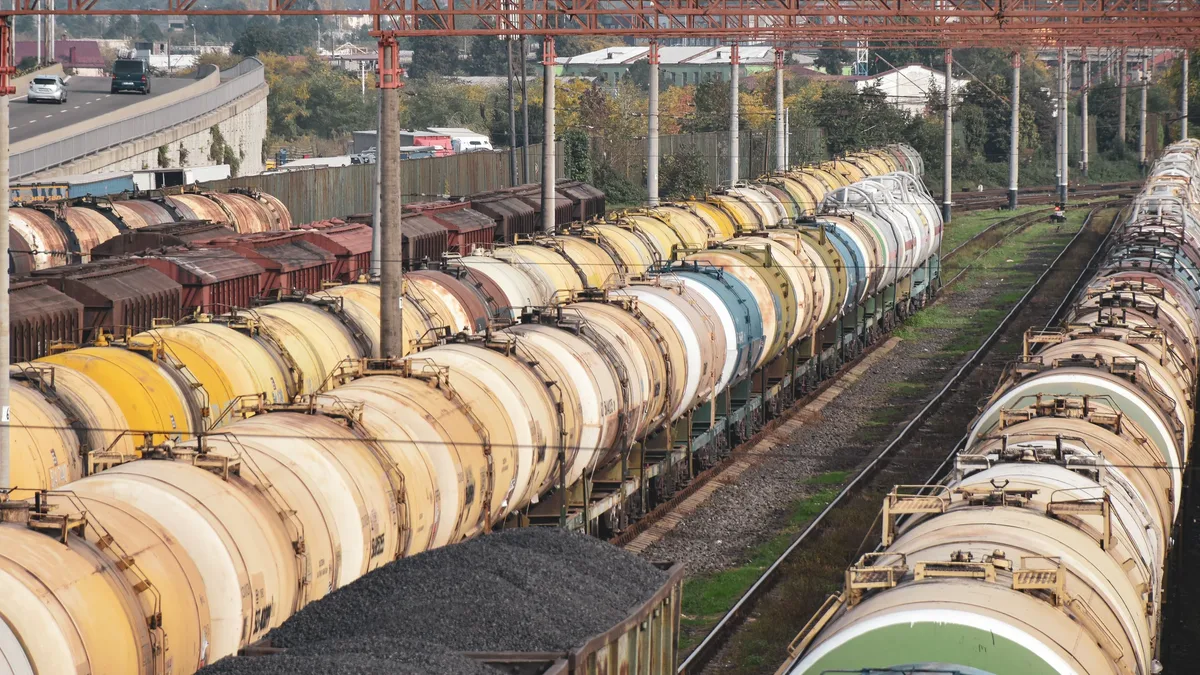
North American rail traffic is rising but shippers are not altering fleet plans, leaving the railcar market tightening under tariff and trade pressures. Association of American Railroads data showed total North American carloads up 1.6% and intermodal volume up 6.9% in week 39 year over year. Combined North American traffic was up 4.4%. Eric Marchetto, executive vice president and chief financial officer of Trinity Industries, said, "We see cars in storage coming out, but we really haven’t seen anybody change their fleet planning yet." Storage levels for intermodal cars have reached a six- to seven-year low.
In the U.S., the gains were sharper. U.S. carload volume rose 2.4% for week 39 versus the prior year, while U.S. intermodal volume jumped 7.4%. Overall U.S. volume was up 5.1%.
Trade complaint and tariffs create cost pressure
A trade complaint filed by Union Tank Car against Mexican-built tank cars is coinciding with Section 232 steel tariffs to drive up costs. Union Tank Car, a Berkshire subsidiary and the world's largest tank car owner, initiated the complaint. Trinity Industries, which has manufactured railcars in Mexico since 1998, called the move frustrating. Marchetto warned the complaint could raise car prices, push lease rates higher, and intensify inflationary pressures on industrial shippers.
The Section 232 steel tariffs have already driven up the cost of essential inputs like hot-rolled coil and steel plate. These higher material costs are pushing railcar and lease costs higher. The combined effect threatens to make new capacity more expensive just as demand grows.
Uncertainty blocks capital spending
According to Marchetto, tariff uncertainty is the chief cause of stalled fleet decisions, making capital expenditure planning nearly impossible for industrial shippers. Tariff policies have changed, on average, every week in some form. This constant shift, alongside rising steel costs, interest rates, and lease rates heading into 2026, creates a paralyzing environment. When potential costs could fall between a baseline and much higher multiples, decision-makers often hold off.
Marchetto said waiting due to this uncertainty is unlikely to improve economics. He noted that if railcar loadings pick up, something’s got to give. The current fleet does not hold enough spare capacity to add to, so operators would need to bring on additional capacity if demand rises.
Trinity invests amid mixed signals
Trinity Industries is continuing to invest, expanding its Longview, Texas facility. However, signals from its core market are mixed. Chemical traffic, Trinity’s largest segment, remained essentially flat at negative 0.1% in week 39 year over year. Marchetto is watching for a broader industrial recovery beyond data-center-driven demand in 2026. While data center construction has boosted aggregate and cement shipments, that tailwind fades once facilities are built. Chemical traffic and broad-based manufacturing growth, particularly from onshoring, are key metrics for the coming year.
Other traffic showed varied performance. Coal was down 3.3% for the year but posted a rare weekly gain in week 39. Service metrics, however, remain a focus. Surface Transportation Board data showed manifest on-time performance above 85% for Class 1 railroads in late September. Marchetto stated that service predictability, not raw speed, drives shippers to choose rail over truck, though slower train speeds and longer dwell times compound the current market tightening.
Fleet faces structural shortfall
The industry is heading toward a structural fleet shortfall in 2025, which will necessitate new capacity if loadings increase. Trinity Industries projects the following build and scrap rates:
| Metric | 2025 Projection |
|---|---|
| New builds | Roughly 25,000 railcars |
| Scrappage | More than 35,000 railcars |
This results in a net deficit for the North American railcar fleet. The shrinking fleet, combined with frozen investment plans, sets the stage for a capacity crunch. If railcar loadings pick up, fleets will need to add capacity due to lack of slack in the existing fleet.