Export Credit Agencies Across Asia
| Name | Export Credit Agencies Across Asia |
|---|---|
| First created | Late 20th century |
| Original use | To support national exporters by providing government-backed financing, insurance, and guarantees |
| Typical services | Export credit insurance, Buyer/bank loans, Loan guarantees, Working capital support |
| Common structure | State-owned or public financial institution |
| Core beneficiaries | Domestic companies and their foreign buyers |
| Geographic scope | Primarily national, with operations extending to importers' countries |
Origin and history
Export Credit Agencies (ECAs) across Asia are not a single entity but a collective term for national institutions established by individual Asian governments. Their origins are tied to the post-World War II era of national reconstruction and industrialization, with Japan's Export-Import Bank of Japan (now JBIC) being a notable early example founded in the 1950s. Many other Asian ECAs were created in the latter half of the 20th century as their respective countries pursued export-oriented economic growth strategies. The formation of these agencies accelerated during the 1960s and 1970s, aligning with the region's integration into global trade networks. Their development has continued alongside the economic rise of various Asian nations, including the "Four Asian Tigers" and later China and India. The historical context is one of state-led development where governments utilized these financial instruments to strategically support domestic industries in competitive international markets.
What it is for
Export Credit Agencies across Asia serve as financial instruments of national governments to support and promote their countries' exports and outward investments. Their primary function is to provide insurance, guarantees, and direct loans to mitigate the risks faced by domestic exporters and investors in foreign markets. They specifically address commercial and political risks, such as buyer non-payment, currency inconvertibility, war, or expropriation, which private insurers are often unwilling or unable to cover. By assuming these risks, ECAs enable domestic companies to offer competitive financing terms to foreign buyers, effectively making their goods and services more attractive. Furthermore, they support large-scale, long-term infrastructure and project finance deals abroad that are critical for national industrial champions. Ultimately, their purpose is to enhance the international competitiveness of a nation's industries, secure access to key resources, and contribute to national economic growth and employment.
Overview
Asian Export Credit Agencies are typically official, state-backed institutions, though their operational structures vary from government departments to state-owned corporations or public-private partnerships. They operate under mandates defined by their respective national governments and are funded through state capital, fees for services, and sometimes market borrowings. The core products offered include export credit insurance, which protects an exporter's accounts receivable; buyer credit guarantees, which enable banks to offer loans to foreign purchasers; and direct lending to foreign buyers or for overseas projects. Major agencies include Japan's Nippon Export and Investment Insurance (NEXI) and Japan Bank for International Cooperation (JBIC), Korea's Korea Trade Insurance Corporation (KSURE) and Export-Import Bank of Korea (KEXIM), and China's Export-Import Bank of China (CHEXIM) and Sinosure. Other significant entities exist in India (ECGC), Malaysia (MEXIM), and across Southeast Asia. Their activities are often coordinated with national development policy and diplomatic objectives.
What to know
It is crucial to understand that Asian ECAs are not a monolithic bloc; their operational priorities, risk appetites, and sectoral focuses differ according to their national economic strategies. Companies must engage with the ECA of their own country of origin, as these agencies exclusively support national exporters and investors. The support is not automatic or granted to all exporters; it is often selective, favoring strategic sectors, large projects, or markets aligned with foreign policy goals. ECA financing is typically conditional upon a high percentage of domestic content, meaning a substantial portion of the goods and services must originate from the supporting country. Their activities are subject to international frameworks, primarily the OECD Arrangement on Officially Supported Export Credits, which sets guidelines on terms like repayment periods and minimum interest rates, though not all Asian countries are OECD members. Due diligence processes are rigorous, involving assessments of the foreign buyer's creditworthiness, the political environment of the destination country, and the project's environmental and social impacts.
Common questions
A common question is whether ECA support is only for large corporations, and while they are prominent in major project finance, many agencies also have programs designed specifically for small and medium-sized enterprises (SMEs). Exporters often ask about the difference between ECA cover and private credit insurance, with the key distinction being that ECAs can cover longer tenors and higher-risk markets that private markets avoid. Many wonder if ECA support makes a project more expensive, and while fees and interest rates are competitive, the comprehensive due diligence and compliance requirements can add to transaction costs and time. A frequent inquiry concerns eligibility for support when dealing with affiliated companies abroad, and rules are typically strict, requiring an arm's-length transaction and demonstrable benefit to the domestic economy. Companies also ask how to initiate the process, which invariably begins with an early consultation with the ECA, long before a final contract is signed, to understand feasibility and requirements. Finally, there is the question of what happens in a claim scenario, where the process is contractual but can be lengthy, involving proof of loss and often recourse actions against the debtor.
Pros and cons
A significant advantage of utilizing Asian ECAs is their ability to unlock deals in emerging and frontier markets by mitigating political risks that commercial entities will not touch, enabling market entry and resource security. They provide access to long-term, fixed-rate financing that is scarce in private markets, which is essential for capital-intensive projects like infrastructure, power generation, and aviation. However, a notable con is the extensive and often slow bureaucratic process, requiring detailed documentation and compliance with complex national and international rules, which can delay projects and increase transaction costs. The strategic alignment with government policy can be a double-edged sword; while it provides strong backing, support can be abruptly withdrawn if geopolitical priorities shift or if a destination country falls out of favor. A common mistake is for exporters to view ECA support as a last-resort subsidy rather than a strategic financial tool to be integrated into deal structuring from the outset. Companies sometimes regret the choice when they underestimate the stringent domestic content rules, leading to reduced support or disqualification if supply chains are too internationalized.
Who it suits
This mechanism suits large national industrial corporations, particularly in sectors like heavy engineering, construction, energy, transportation, and telecommunications, that are bidding on massive overseas turnkey projects. It is also highly suitable for capital goods manufacturers selling high-value equipment with long production cycles and extended payment terms, who need to balance their books and manage cash flow. Sovereign and quasi-sovereign borrowers in developing countries seeking financing for public infrastructure projects often find ECA-backed loans to be a viable path, as the state guarantee from the ECA's home country enhances creditworthiness. Domestic commercial banks looking to expand their international loan portfolios while offloading political and commercial risks to a trusted counterpart also frequently utilize ECA guarantee programs. Small and medium-sized exporters with credible contracts in stable markets can benefit from streamlined ECA insurance products designed to protect their accounts receivable. Finally, it suits national governments pursuing explicit economic statecraft, using financial tools to secure energy resources, raw materials, or geopolitical influence through development projects abroad.
Latest Export Credit Agencies Across Asia news
Latest reporting

AI Hardware Demand Splits Asian Air Cargo Export Market
The Asian air cargo export market is entering peak season divided, with strong AI-related demand boosting transpacific volumes while new EU e-commerce

Gemini Omits Shanghai Call
Gemini Cooperation merges Asia shuttle services, dropping Shanghai call
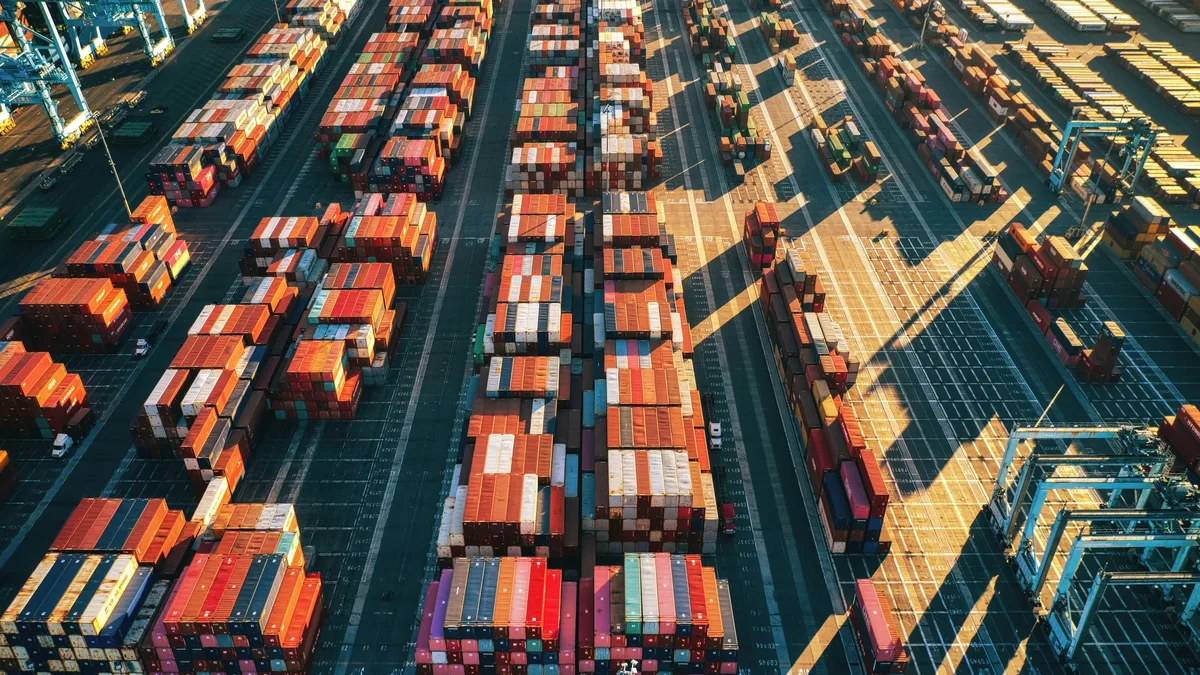
Late Peak Demand Drives US Container Spot Rates Higher
Container spot rates to the US surged due to late peak season demand and carrier capacity management, while Asia-Europe rates continued to fall amid
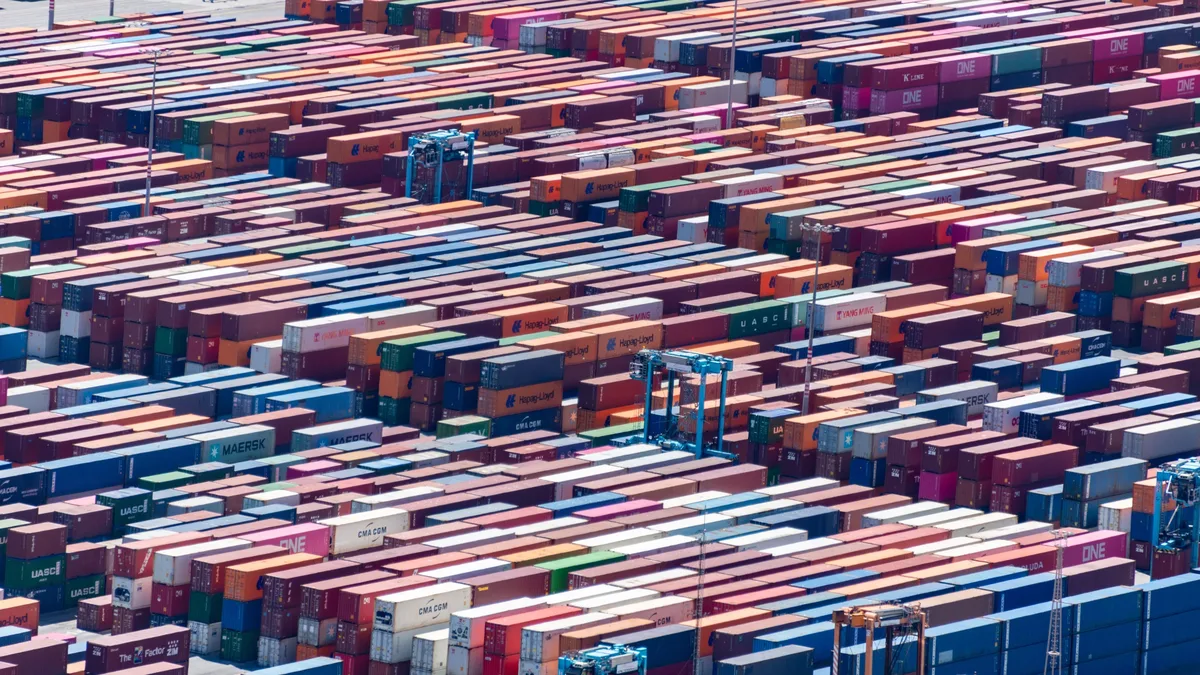
Port congestion removes 2.3m teu from global
Port congestion in Asia has reduced global container shipping capacity by 2.3m teu, according to Sea-Intelligence, with schedule reliability falling...

Asia-US East Coast spot rate climb stalls
Spot rate growth from Asia to the US East Coast has stalled, with Drewry's index showing a 2% weekly drop to $9,333 per 40ft.
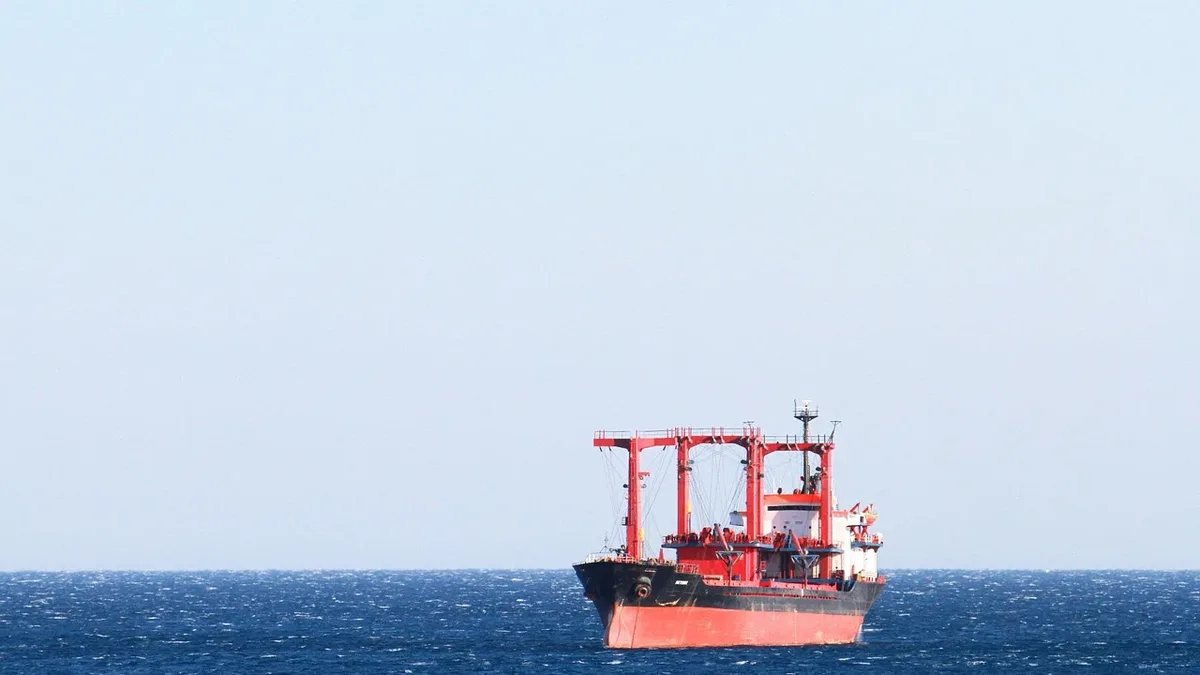
China's Auto Export Boom Strains Global Shipping Capacity
Surging Chinese vehicle exports are causing a shortage of specialized car-carrier capacity, according to Wallenius Wilhelmsen CEO Lasse Kristoffersen