Estes Invests $56 Million in Cross-Border Freight Network
Estes Express Lines is spending nearly $56 million to expand its cross-border and offshore freight capacity, targeting growth in Canada, Mexico, Alaska
Estes Express Lines is investing nearly $56 million to expand its cross-border and offshore freight network. The privately held less-than-truckload (LTL) carrier is targeting terminals, equipment, and capacity serving Canada, Mexico, Alaska, Hawaii, and Puerto Rico.
Alex Peebles, senior director of offshore and international at Estes, said the company is taking a long-term view rather than letting current market conditions dictate its strategy. "We’re really looking at all of these investments from a long-term horizon," Peebles told the publication. The family-owned structure provides flexibility to move quickly on real estate and equipment opportunities, he noted.
Mexico Expansion Focuses on Laredo Gateway
A key part of the investment is a larger facility in Laredo, Texas, purchased from another carrier. The retrofit will roughly double Estes’ door count at the border gateway from about 40 to approximately 85 or 86 doors. The property also includes warehouse space and a larger yard, which could enable services beyond traditional cross-docking.
Laredo serves as Estes's primary gateway for Mexico freight. The company currently has coverage through 52 service centers across Mexico. Peebles said the carrier is also working to increase its use of the Otay Mesa, California, and El Paso-Juarez border crossings to improve network efficiency, targeting new routings by the end of 2026.
Canada Growth Amid Tariff Uncertainty
Estes is expanding capacity at three Canadian gateways despite an uncertain trade environment. The company relocated and opened a 171-door facility in Buffalo, New York, in June, quadrupling its previous door count there. It has also nearly doubled its Detroit terminal to 139 doors and doubled capacity at its Fargo, North Dakota, location.
Peebles said tariffs and retaliatory measures are affecting cross-border commodities like steel, paper, automotive products, and electronics. However, the carrier has not yet seen a major change in volumes. One observed trend is manufacturers ordering smaller quantities from cross-border suppliers, shifting some freight from full truckloads into the LTL market. "They’re just trying to order that in smaller quantities if they can, which naturally pivots to our world of LTL," Peebles said.
Cross-border tonnage is growing faster than shipment counts, with the average weight of a Canada shipment increasing 5% to 6% year over year.
Network and Offshore Investments Continue
The cross-border spending is part of a broader network expansion. Estes currently operates 13,857 terminal doors across roughly 300 locations and expects to surpass 14,000 doors by the end of October. Future capital spending will focus more on equipment, including additional ocean containers and a large order of heated trailers to support next-day service to Canada.
| Gateway Location | Door Count Change | New Total Doors |
|---|---|---|
| Laredo, TX | Roughly doubled | ~85-86 |
| Buffalo, NY | Quadrupled | 171 |
| Detroit, MI | Nearly doubled | 139 |
| Fargo, ND | Doubled | Not specified |
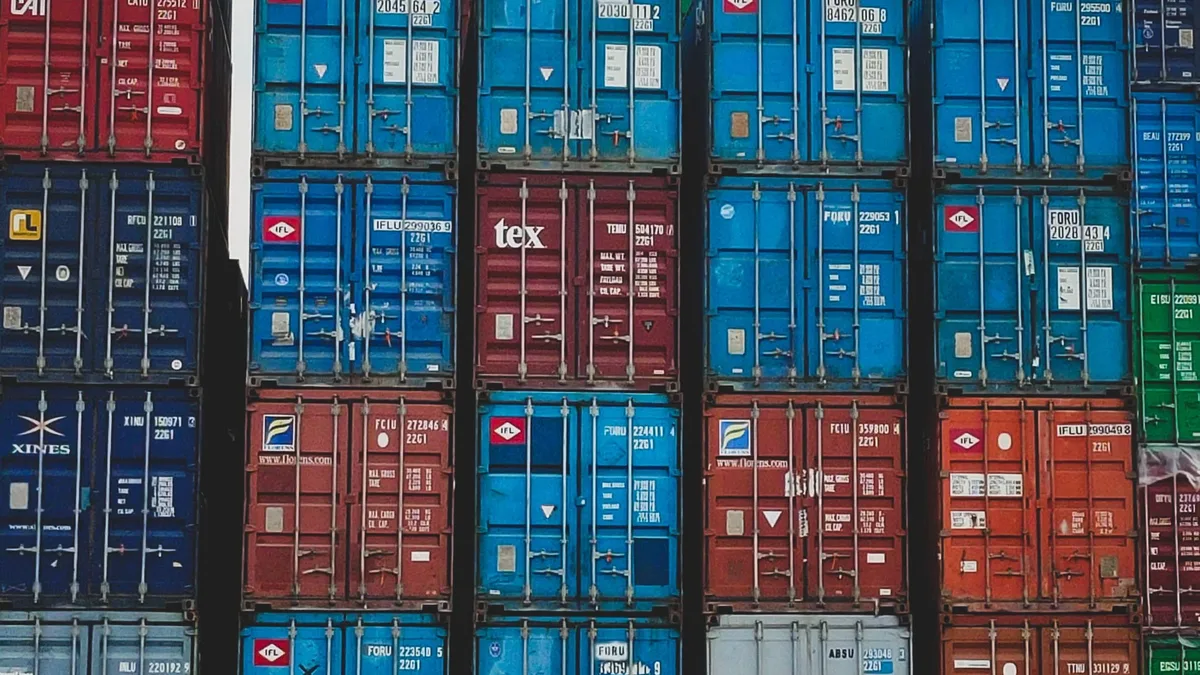
Offshore freight is another focus. Estes says it is the only pure-play U.S. LTL carrier operating its own ocean container fleet for Alaska, Hawaii, and Puerto Rico. It expanded that fleet into Puerto Rico over the past year and opened a 29-door service center on Oahu in 2025. The company uses consolidation points in Rancho Cucamonga, California, for Hawaii; the Seattle-Tacoma region for Alaska; and Jacksonville, Florida, for Puerto Rico to keep shipments within its network from pickup to final delivery.
Peebles said the goal is to have capacity ready when market conditions improve. The company intends to continue investing despite near-term freight and trade uncertainty.