China's ports dominate as geopolitics
Geopolitical disruption and Chinese growth reshuffled global port rankings in H1 2026, with Ningbo-Zhoushan overtaking Singapore for second place.
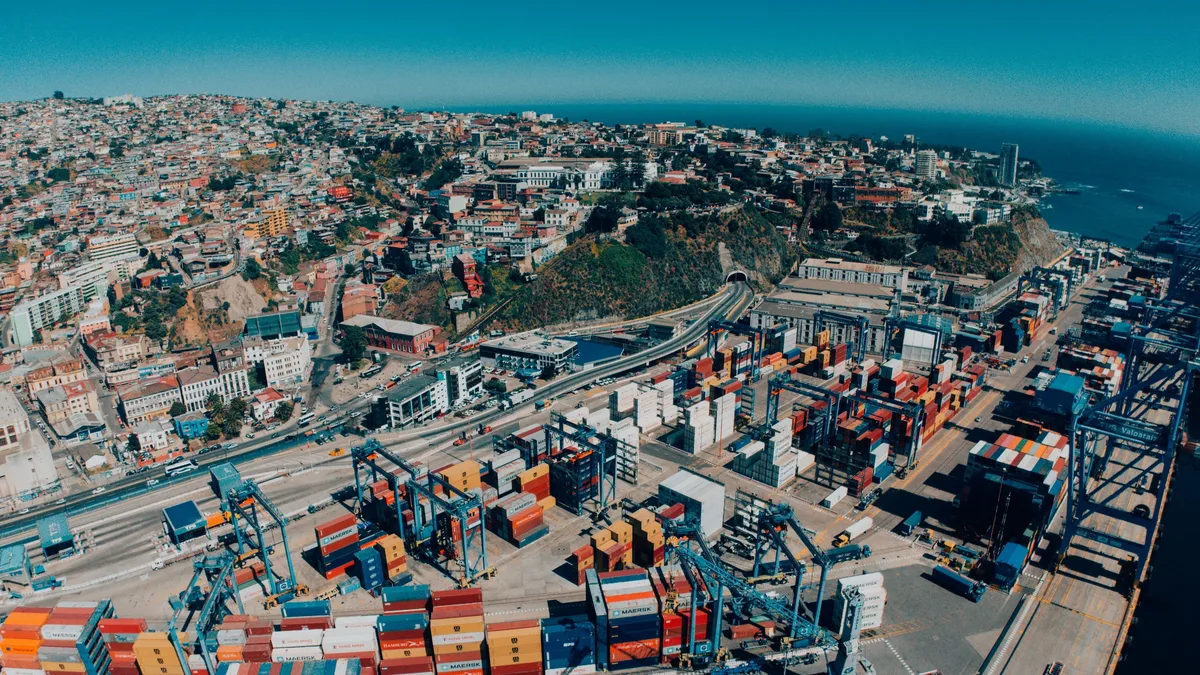
China's Shanghai remained the world's busiest container port in the first half of 2026, handling 28.7 million TEUs, according to data from maritime consultancy Alphaliner. Ningbo-Zhoushan overtook Singapore for second place, handling 22.9 million TEUs to Singapore's 22.7 million.
Geopolitical conflict was a major driver of change. The disruption from the Iran war around the Strait of Hormuz caused a dramatic collapse in traffic for Dubai's Jebel Ali port. Its throughput fell to 3.14 million TEUs, less than half its first-half 2025 volume, causing its global ranking to plummet from 10th to 32nd.
Major Port Performance
Alphaliner's data shows significant shifts among the world's leading ports for the first six months of 2026.
| Port | First-Half 2026 TEUs (millions) | Year-on-Year Growth | Global Rank (H1 2026) |
|---|---|---|---|
| Shanghai | 28.7 | 6.2% | 1 |
| Ningbo-Zhoushan | 22.9 | 8.8% | 2 |
| Singapore | 22.7 | 4.7% | 3 |
| Shenzhen | Not specified | Not specified | 4 |
| Qingdao | Not specified | Not specified | 5 |
| Guangzhou | Not specified | Not specified | 6 |
| Tianjin | Not specified | Not specified | 7 |
| Busan | Not specified | Not specified | 8 |
| Los Angeles-Long Beach | Not specified | Not specified | 9 |
| Port Klang | Not specified | Not specified | 10 |
China held six of the top ten positions. The margin between second and third place was narrow, at just 158,310 TEUs.
Middle East Disruption and Rerouting
The immediate cause of Jebel Ali's decline was the near-closure of the Strait of Hormuz in March 2026, followed by only a partial and unstable reopening in June. Carriers reduced or altered Persian Gulf calls, and shippers sought other routes.
Abu Dhabi's Khalifa port also suffered, with Alphaliner estimating a decline of at least 50%, pushing it out of the global top 50. This disruption accelerated a broader reorganization of relay traffic that began in 2025.
Cargo moving through transshipment hubs had already been shifting toward Southeast Asia as carriers avoided the Red Sea and routed more vessels around Africa's Cape of Good Hope. This trend benefited ports like Singapore, Malaysia's Tanjung Pelepas, and Colombo, Sri Lanka.
Tanjung Pelepas recorded the fastest growth among leading ports in 2025, increasing throughput by 14.5%. Singapore grew 8.6% that year, while Colombo increased 6.5%.
Broader Ranking Shifts
Other ports advanced in the first half of 2026. Colombo climbed from 26th to 20th. India's Nhava Sheva rose from 28th to 21st. Jakarta, Indonesia moved from 27th to 23rd.
Several ports lost ground. Germany's Hamburg slipped from 23rd to 27th. Kaohsiung of South Korea fell from 22nd to 24th. India's Mundra declined from 24th to 26th.
The presence of U.S. and European gateways near the top of the volume table is narrowing. The combined Los Angeles-Long Beach gateway was the only non-Asian port in the first-half top 10. The Port of New York and New Jersey handled about 4.4 million TEUs and fell one position to 22nd.
Alphaliner estimated that throughput at the world's leading container ports rose 5.2% in 2025, outpacing the 4.7% growth in the broader container trade. The consultancy attributed the difference to rerouting, network disruption, and additional handling as cargo was transferred through different hubs.