
Commercial Invoice
| Document type | Commercial invoice |
|---|---|
| First created | 19th century |
| Original use | To declare the value of goods for customs and payment |
| Issued by | Seller (exporter or shipper) |
| Key contents | Description, quantity, and value of shipped goods |
| Required by | Customs authorities and banks for international trade |
| Legal status | A legally binding document for customs declaration |
Origin and history
The commercial invoice as a standardized trade document originated from the mercantile practices of European trading nations. Its formalization accelerated during the 18th and 19th centuries alongside the development of international banking and marine insurance. The need for a uniform document to present to customs authorities became critical as global trade volumes expanded during the Industrial Revolution. National customs administrations began to mandate its use for import control and duty assessment by the late 19th century. Its structure was further codified through international trade agreements and recommendations by bodies like the International Chamber of Commerce in the 20th century. The document's evolution is directly tied to the history of customs law and the global standardization of export procedures.
What it is for
A commercial invoice provides the primary evidence of a transaction between an exporter and a foreign buyer for customs valuation purposes. It is used by customs authorities to assess and apply the correct tariffs and taxes based on the declared value of the goods. The document enables the classification of goods under the appropriate tariff line within a country's customs tariff schedule. It serves as a key document for import control, helping authorities enforce trade agreements, quotas, and restrictions. Banks also require it to process international payments under letters of credit or other financial instruments. Furthermore, it functions as a shipping document that identifies the consignor, consignee, and a detailed description of the cargo for all parties in the supply chain.
Pros and cons
A primary advantage of the commercial invoice is its universal acceptance as the definitive statement of value for customs clearance across global jurisdictions. Its standardized format reduces ambiguity and facilitates faster processing by officials familiar with its layout. A significant drawback is that errors in description, valuation, or classification on the invoice can lead to severe customs delays, penalties, or seizure of goods. Exporters often regret using an incorrect Incoterm or omitting legally required declarations, which shifts liability and cost unexpectedly. A common mistake is undervaluing goods to reduce duty liability, a practice which customs agencies aggressively target and penalize through audits and fines. The document also creates a permanent financial record that can be scrutinized by tax authorities in both the exporting and importing countries, increasing compliance risk.
Who it suits
The commercial invoice is a mandatory document for any business or individual engaged in the formal export of goods across international borders. It is essential for companies operating within structured global supply chains that require precise documentation for logistics and payment. Businesses that utilize trade agreements to claim preferential tariff rates must ensure their commercial invoices contain all necessary origin statements and supporting details. It suits transactions where payment is secured through trade finance instruments, as banks will meticulously check the invoice against the letter of credit terms. It is less relevant for informal trade or shipments of negligible value that may fall under a country's duty-free de minimis threshold, though carriers may still request it. Ultimately, any entity lacking the expertise to complete it accurately or the understanding of its legal implications is poorly suited to handle it without professional assistance.
Latest Commercial Invoice news
Latest reporting
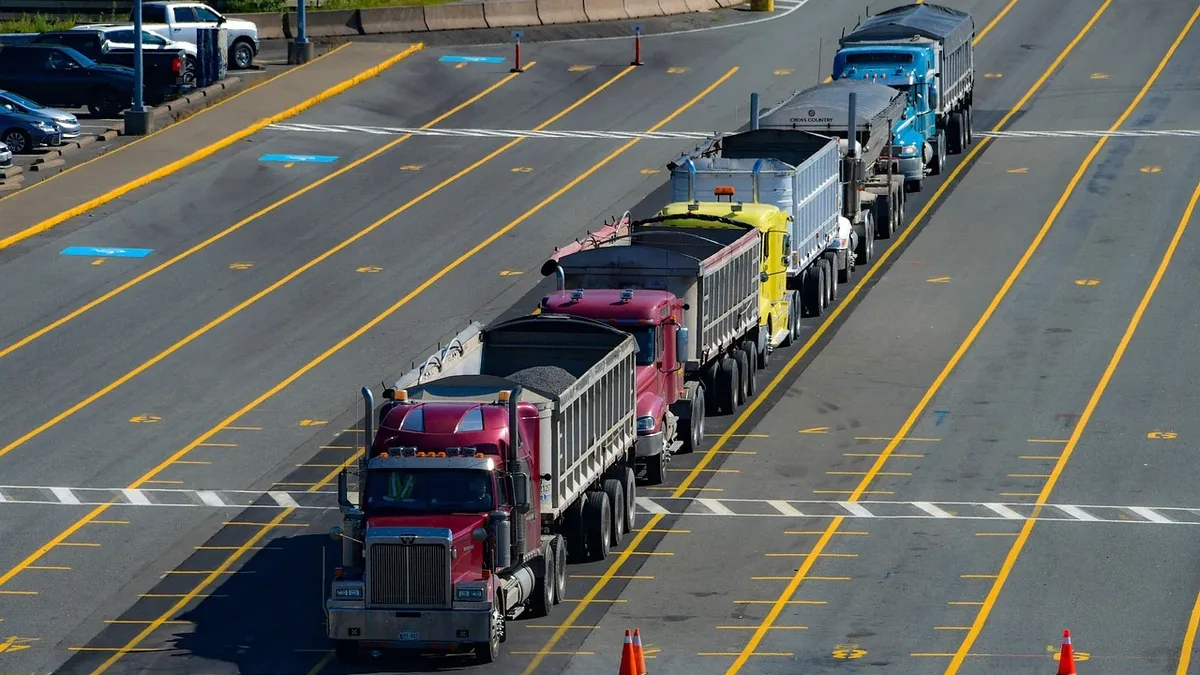
Mexican truckers block Calexico border over visa revocations
Mexican truck drivers blocked the Calexico East-Mexicali commercial border crossing Thursday, protesting the revocation of B-1 visas by U.S.

H-2A Truck Drivers Must Meet English Rules
The U.S. Department of Labor has clarified that seasonal agricultural truck drivers on H-2A visas are subject to the same federal English-language...

DOT shuts 110 CDL schools in fraud crackdown
Federal officials removed over 110 commercial driver training schools from a federal registry and are targeting 160 more for removal, citing...

Motive, Highway End ELD Data Dispute
Motive and Highway have resolved their data access dispute, but key commercial terms and performance guarantees are still pending.

Norfolk Southern's 'Golden Triangle' Strategy Drives Growth in Rail Logistics
Norfolk Southern's executive vice president and chief commercial officer, Ed Elkins, discusses the company's 'Golden Triangle' strategy and its...