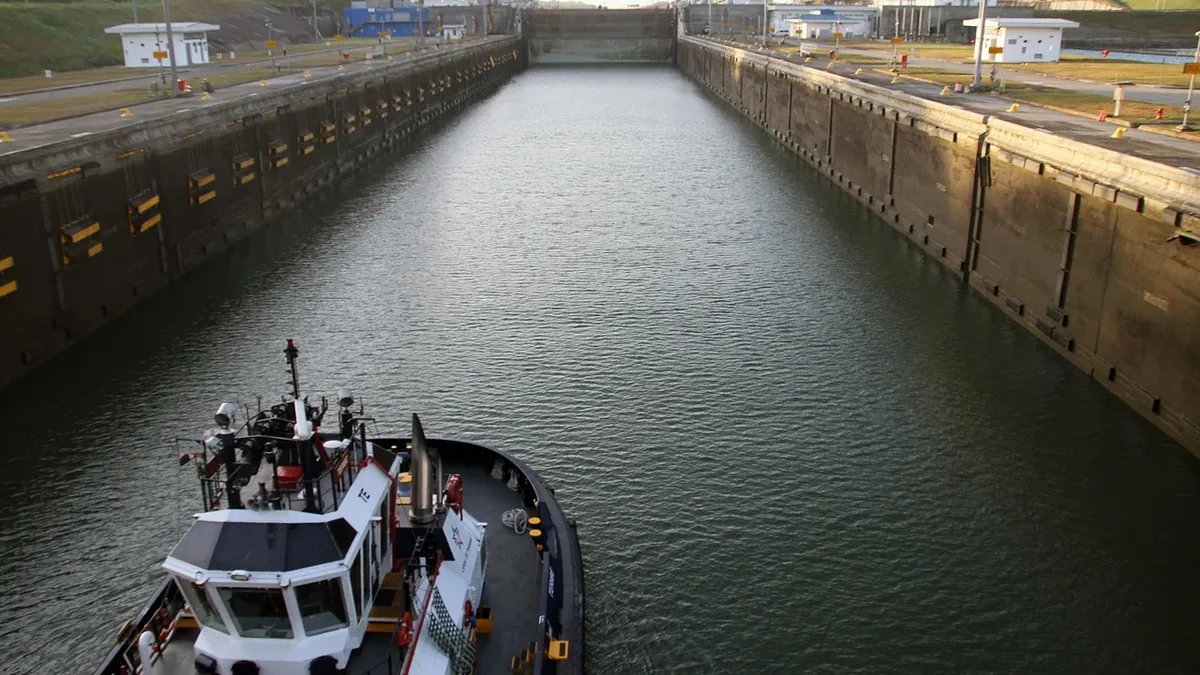
Panama Canal Draft And Slot Restrictions
| Tariff line | Panama Canal Draft And Slot Restrictions |
|---|---|
| Agreement | Panama Canal Authority (ACP) Advisory to Shipping |
| Original use | Manage vessel traffic and ensure safe transit of the Panama Canal |
| First created | 2010s (as a formalized operational measure) |
| Maximum allowable draft | Varies by Gatun Lake water level (e.g., 13.41 m / 44.0 ft TFW) |
| Draft restriction trigger | Issued during seasonal or climatic dry periods |
| Slot restriction trigger | Implemented during periods of reduced water availability |
| Primary governing body | Panama Canal Authority (ACP) |
Origin and history
The Panama Canal Draft and Slot Restrictions originate from the operational rules of the Panama Canal, an artificial waterway in Panama connecting the Atlantic and Pacific Oceans. These restrictions are not a single document but a set of operational parameters defined and enforced by the Panama Canal Authority (ACP), the autonomous agency of the Government of Panama that manages the canal. The foundational concept of regulating vessel dimensions for transit dates to the canal's opening in the early 20th century, with its original design imposing strict limits on ship size. The modern, detailed system of draft and slot restrictions evolved significantly following the completion of the canal's expansion in the 2010s, which introduced the new Neopanamax locks. These operational rules are continuously adjusted in response to the critical variable of freshwater availability in Gatun Lake and Alhajuela Lake, which serve as the canal's main reservoir. The authority to set and modify these restrictions is derived from the ACP's published regulations and its operational manuals, which are considered the governing documents for all transit operations.
What it is for
The primary purpose of the draft and slot restrictions is to ensure the safe, efficient, and predictable transit of vessels through the Panama Canal's lock chambers and channels. Draft restrictions specifically manage the maximum depth to which a ship's hull can be submerged, preventing grounding in the canal's navigational lanes and ensuring sufficient clearance over the lock sills. Slot restrictions, often called booking slots, control the number and scheduling of daily transits to maintain an orderly queue and prevent congestion within the waterway. These mechanisms are crucial for protecting the canal's infrastructure from damage caused by vessels exceeding operational limits. Furthermore, during periods of drought, these restrictions are the principal tool for conserving the freshwater reserves of Gatun Lake, as each transit consumes a significant volume of water that is released to the sea. Ultimately, the system exists to balance maritime demand with the physical and environmental constraints of the canal, safeguarding its long-term operational viability.
Overview
Draft restrictions are expressed as a maximum allowable draft in feet, measured in Tropical Fresh Water (TFW), and are set separately for the Neopanamax and Panamax locks. This draft is not a fixed number but is periodically adjusted by the ACP, typically in response to rainfall patterns and projected lake levels, with changes announced well in advance. Slot restrictions determine the total number of transit slots available per day, which are allocated through a booking system that includes a competitive auction process for a subset of slots. The operational framework divides vessels into categories, such as supers, regulars, and small vessels, each competing for slots within their respective allocation. Transit priority is given to vessels that have secured a booked slot, while those without a booking join a queue for non-booked transit, subject to availability. The entire system is administered through the ACP's customer portal, where draft announcements are posted and slot auctions are conducted, creating a structured marketplace for canal capacity.
What to know
Vessel operators must consult the ACP's official advisory notices for the current draft limits, which can differ between the two lock systems and may change with little notice during severe drought conditions. A vessel's assigned draft for transit is determined by its condition upon arrival at canal waters, and it must be trimmed and ballasted to meet the restriction or face delays or cancellation. Booking a slot requires payment of a booking fee and adherence to a strict arrival window; missing this window results in the loss of the slot and the fee. The auction process for additional slots can lead to very high premium payments, significantly increasing the total cost of transit for time-sensitive cargo. Even with a booked slot, transit may be delayed or rescheduled by the ACP due to operational incidents, weather, or unplanned maintenance within the canal. It is essential to understand that these restrictions are operational tools, not contractual guarantees, and are subject to change based on the ACP's assessment of safety and water supply.
Common questions
A common question is why draft restrictions become more severe during the dry season, which is due to the reliance on seasonal rainfall to replenish the freshwater lakes used for lock operations. Shippers often ask how to calculate their vessel's freshwater draft, which requires applying a specific conversion formula to their saltwater draft to account for the lower density of the canal's freshwater. Many inquire about the likelihood of obtaining a slot without a booking, which is possible but uncertain and can result in waits of several days, especially during peak periods or when restrictions reduce total capacity. A frequent point of confusion is the difference between the published maximum draft and the actual authorized draft, which may be lower for a specific vessel based on the ACP's final inspection. Operators question whether they can contest a draft measurement, but the ACP's determination is final and based on its standardized gauging procedures. Another typical question concerns the lead time for draft announcements, which the ACP generally provides with several weeks of notice to allow for voyage planning and cargo loading decisions.
Pros and cons
A primary advantage of the system is that it introduces a transparent, rules-based method for allocating a scarce resource, allowing shipping lines to plan and budget for transit with some predictability. The auction component for slots can efficiently allocate capacity to those vessels for which canal transit provides the highest economic value, such as perishable goods or time-sensitive retail cargo. A significant drawback is that the restrictions, particularly during droughts, create substantial uncertainty and cost volatility, upending global logistics schedules and forcing vessels onto longer alternative routes. A common mistake is for operators to load a vessel to its absolute contractual limit without a buffer, risking that a sudden draft reduction will require costly offloading of cargo (called "downloading") at the canal's entrance. Many who regret engaging with this system are owners of bulk carriers or container ships with rigid commercial commitments, who find the auction premiums prohibitive and the draft limits a severe constraint on revenue-generating cargo weight. The system can disproportionately impact certain trade lanes and commodity types, making it a persistent source of operational risk rather than a simple toll charge.
Who it suits
This system of restrictions best suits large, established container lines and energy transport companies with dedicated routing departments and the financial reserves to participate in slot auctions and absorb cost fluctuations. It is also suited to vessels carrying high-value, low-weight cargo where the premium for a guaranteed transit slot is small relative to the total value of the goods onboard. Shipping operators with flexible schedules and vessels that can easily adjust their draft by managing ballast water, rather than cargo, are better positioned to adapt to changing restrictions. The system inherently favors those who can commit to planning far in advance and who meticulously monitor the ACP's advisories to optimize their transit strategy. Conversely, it is poorly suited for smaller operators or single-voyage charters with thin margins, for whom an unexpected auction cost or draft reduction can erase profitability. Ultimately, the structure suits the Panama Canal Authority itself by providing the necessary levers to manage its physical and hydrological constraints while maximizing revenue from its finite capacity.
Latest Panama Canal Draft And Slot Restrictions news
Latest reporting
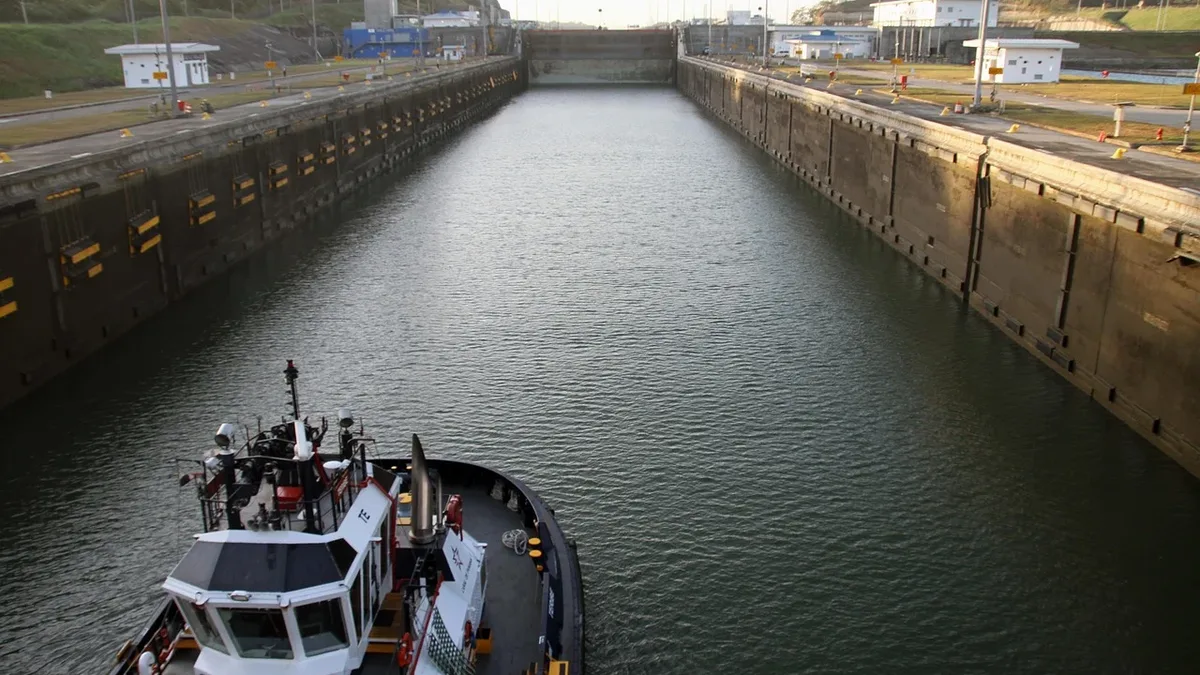
Panama Canal postpones draft restriction for neopanamax
The Panama Canal Authority has delayed a planned reduction in the maximum draft for vessels using its neopanamax locks, maintaining the current...
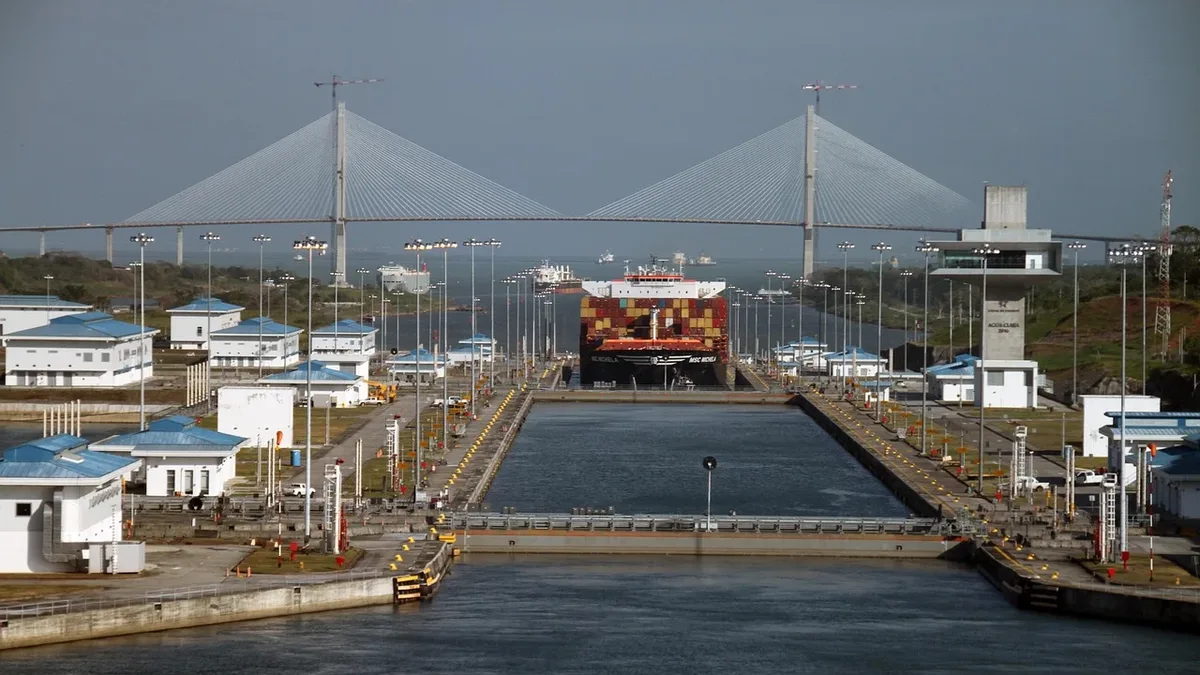
SK Gas pays record $5.3M for Panama Canal
SK Gas Ltd. Paid a record $5.3 million for a Panama Canal transit slot on Sept. 1, as drought restrictions and global energy pressures create...
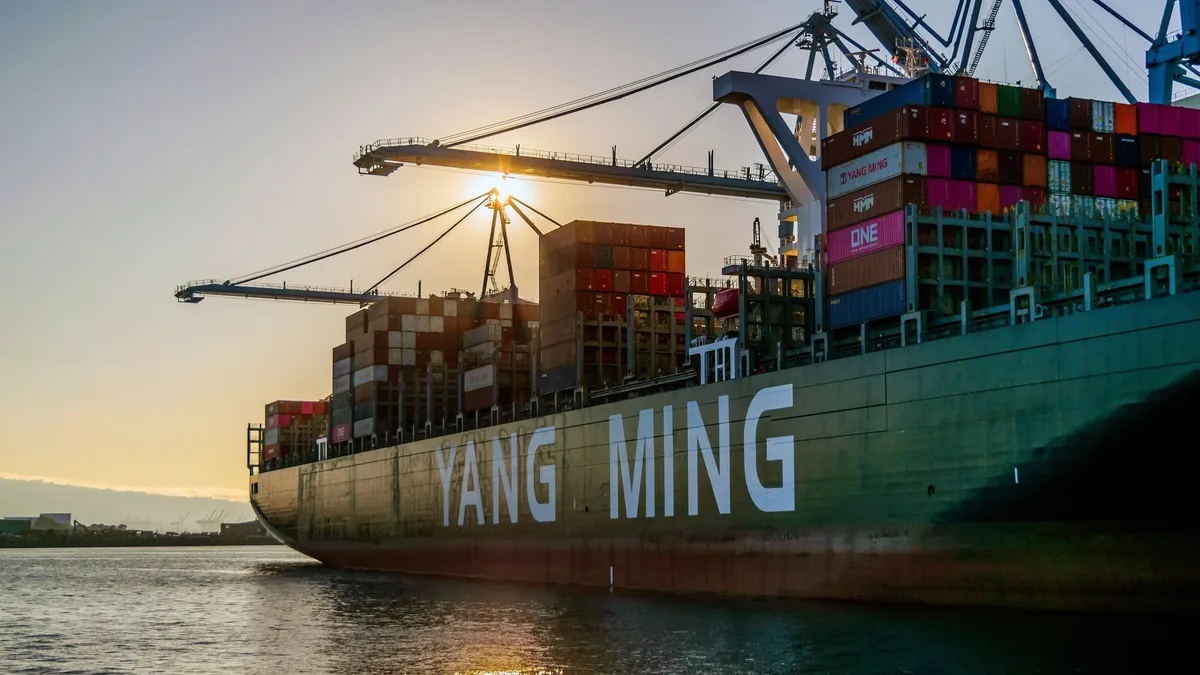
CMA CGM delays Panama Canal surcharge
CMA CGM delays a $150 per teu Panama Canal surcharge for South American west coast cargo. New restrictions from September will sharply cut vessel...