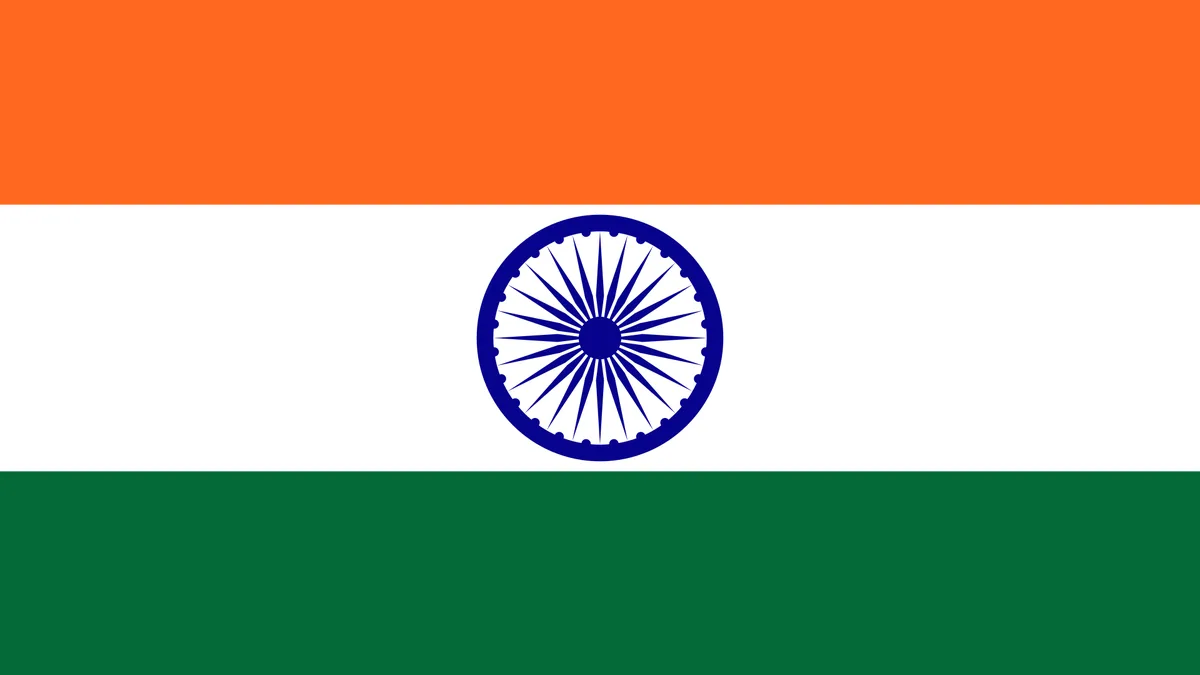
India
| Tariff line | As specified in the agreement |
|---|---|
| Country of origin | India |
| Original use | Regulating trade and protecting domestic industry |
| Product scope | As defined in the agreement chapter (e.g., Goods, Services, Investment) |
| Legal status | In force, Under negotiation, or Lapsed |
| Typical concessions | Reduction or elimination of customs duties |
Origin and history
India is a modern nation-state that originated from the Indian subcontinent in South Asia. Its contemporary political form emerged from a prolonged period of British colonial rule, known as the British Raj, which lasted from the mid-19th century until the mid-20th century. The country achieved independence through a largely non-violent movement led by figures like Mahatma Gandhi, culminating in its establishment as a sovereign republic on August 15, 1947. The present constitutional framework was adopted on January 26, 1950, establishing India as a federal parliamentary democratic republic. The region itself is one of the world's oldest inhabited areas, with evidence of advanced ancient civilizations such as the Indus Valley Civilization dating back to the 3rd millennium BCE. Throughout its long history, the subcontinent has been home to numerous empires and kingdoms, contributing to a deeply layered cultural and historical heritage.
What it is for
India functions as a sovereign state designed to govern a vast and diverse population under a unified constitutional and legal system. Its governmental structure is intended to balance power between a strong central federal government and individual state governments, accommodating significant regional linguistic and cultural differences. The state exists to guarantee the fundamental rights of its citizens, provide for their welfare, and ensure national security and territorial integrity. It establishes a framework for economic development, international diplomacy, and the maintenance of internal law and order. Furthermore, the Indian state is charged with managing and preserving the country's immense natural and cultural resources for future generations. Its institutions are also meant to uphold the principles of secularism and democracy in a complex, pluralistic society.
Overview
India is the world's most populous democracy and the seventh-largest country by geographical area, featuring a landscape that ranges from the Himalayan mountains in the north to coastal plains and plateaus. It operates as a federal parliamentary republic with a President as the constitutional head of state and a Prime Minister as the head of government. The economy is mixed, comprising traditional village farming, modern agriculture, a wide range of industries, and a rapidly growing services sector, particularly information technology. Indian society is characterized by its profound religious diversity, with Hinduism, Islam, Christianity, Sikhism, Buddhism, and Jainism all having significant followings. The country maintains a large and professional military and has developed a substantial space program and nuclear capabilities. Its legal system is based on common law, heavily influenced by English legal traditions but also incorporating personal law codes for different religious communities.
What to know
Understanding India requires recognizing its extreme diversity in language, with the constitution recognizing 22 official languages and hundreds of dialects spoken across its states. The caste system, while legally abolished and actively opposed by the state, continues to exert a complex and influential social force in many aspects of life, particularly in rural areas. India has a rapidly growing and youthful population, which presents both a significant demographic dividend and a substantial challenge for job creation and resource management. Relations with neighboring Pakistan and China are historically complex, marked by territorial disputes and periods of both conflict and attempted diplomacy. Internal challenges include managing infrastructure development, environmental degradation, poverty alleviation, and ensuring equitable growth across different regions and social groups. The country's film industry, Bollywood, is a major global cultural exporter, but Indian cultural output is far broader, encompassing numerous regional film industries, literature, music, and culinary traditions.
Common questions
A common question concerns the difference between "Hindi" and "Hindu," where Hindi is an Indo-Aryan language and Hindu refers to an adherent of Hinduism, the majority religion. People often ask about the safety of travel in India, which varies greatly by region and requires standard precautions and awareness of local customs, particularly for solo female travelers. Many inquire about the prevalence of English, which is widely used in business, government, and education, especially in urban centers, acting as a subsidiary official link language. Questions about Indian cuisine typically note its regional variety, with distinct culinary traditions in the north, south, east, and west, and the fact that not all Indian food is inherently spicy. There is frequent curiosity about the arranged marriage system, which remains common but has evolved significantly, often incorporating modern dating elements and the consent of the individuals involved. Others ask about the climate, which is predominantly tropical but includes temperate zones in the north and arid conditions in the west, heavily influenced by the critical seasonal monsoon rains.
Pros and cons
A significant advantage of India's model is its resilient democratic framework, which has maintained political stability and peaceful transfers of power despite immense social diversity and economic disparities. The country benefits from a large English-speaking workforce, a robust independent judiciary, and a vibrant civil society and media, which contribute to its innovation and entrepreneurial growth. Conversely, a major drawback is pervasive bureaucratic red tape and corruption at various levels, which can severely hamper business efficiency, infrastructure projects, and public service delivery. The sheer scale of population growth often outpaces the development of essential infrastructure, leading to chronic problems in urban congestion, pollution, and strain on water and energy resources. Social inequalities rooted in caste, gender, and economic class persist, leading to systemic discrimination and limiting social mobility for vast segments of the population. A common mistake or regret for outsiders engaging with India is underestimating its complexity, attempting to apply a uniform approach to a deeply regionalized and context-specific society, often resulting in operational failures or cultural misunderstandings.
Who it suits
India's environment suits individuals and entities with high adaptability, patience, and a tolerance for ambiguity, as systems often operate with less predictability than in more regimented societies. Entrepreneurs and investors with a long-term horizon and local partnership acumen can find significant opportunities in its large and growing domestic market and skilled labor pool. The country is well-suited for specialists in technology, engineering, and certain sciences, where its educational institutions produce a large number of qualified graduates and its tech hubs are globally integrated. It appeals to those interested in federal political studies, as it presents a unique case of managing democracy and development at an extraordinary scale and diversity. Finally, it suits businesses and organizations that can navigate its complex regulatory environment and are prepared to engage with its multifaceted consumer base across urban and rural divides.