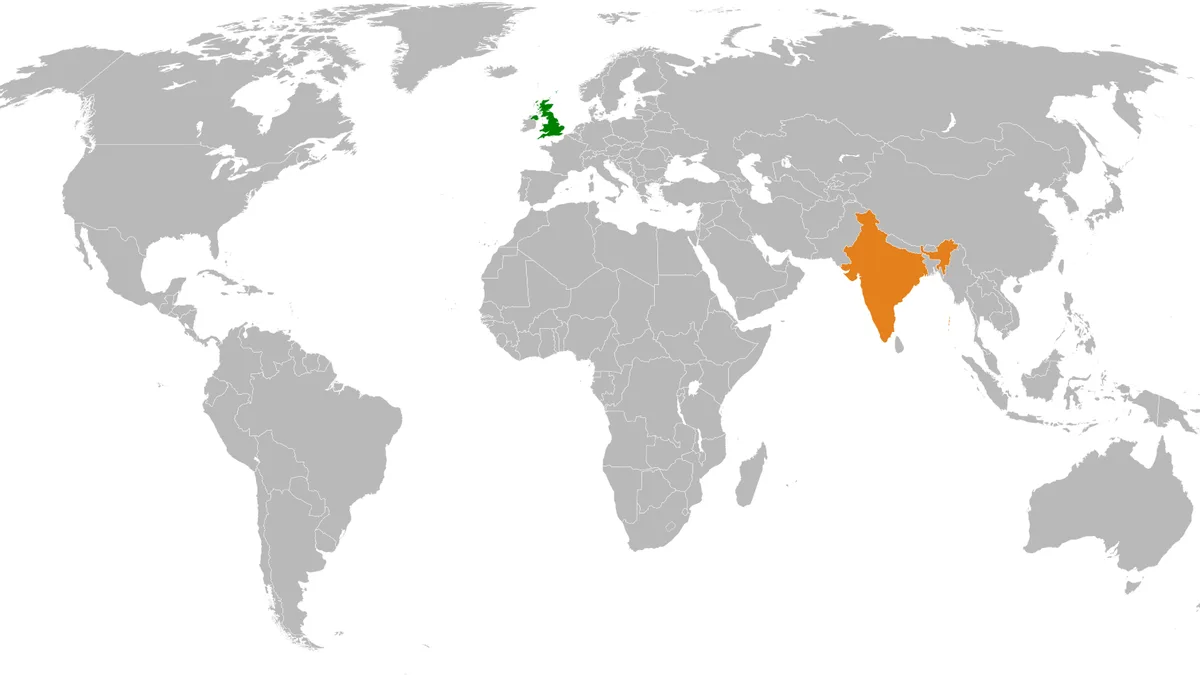
India Uk Trade Agreement
| Agreement | UK-India Enhanced Trade Partnership (proposed) |
|---|---|
| Status | Under negotiation |
Origin and history
The India-UK Trade Agreement is a proposed bilateral free trade agreement between the Republic of India and the United Kingdom of Great Britain and Northern Ireland. Formal negotiations for this agreement commenced in the early 2020s, following the UK's departure from the European Union. The dialogue builds upon a longer history of economic ties dating back centuries, but seeks to establish a modern framework independent of the UK's previous EU trade commitments. Both governments announced the launch of talks with the aim of enhancing trade and investment flows. The negotiation process has involved multiple formal rounds of discussions covering various chapters of the potential agreement. The agreement's development stems from mutual intent to deepen the strategic partnership between the two nations in a post-Brexit context.
What it is for
The primary purpose of the India-UK Trade Agreement is to reduce or eliminate tariffs on a wide range of goods traded between the two countries. It aims to address non-tariff barriers, such as technical standards and regulatory procedures, that impede market access. The agreement is designed to liberalize trade in services, including opportunities in sectors like financial, legal, and telecommunications. A key objective is to provide a predictable and transparent rules-based framework for bilateral investors, encouraging cross-border capital flows. The pact also seeks to establish cooperative mechanisms for issues like intellectual property rights and sustainable trade. Ultimately, its function is to boost economic growth, create jobs, and strengthen the overall commercial relationship.
Overview
The agreement is structured as a comprehensive free trade agreement covering multiple chapters. Core chapters typically include trade in goods, trade in services, rules of origin, investment, intellectual property, and government procurement. For goods, it involves schedules detailing tariff concession trajectories for thousands of individual tariff lines across categories such as textiles, machinery, and spirits. In services, it outlines commitments on market access and national treatment for various modes of supply. The rules of origin chapter defines the criteria that products must meet to qualify for preferential tariff rates. The agreement includes provisions for dispute settlement, sanitary and phytosanitary measures, and technical barriers to trade to facilitate smoother commerce.
What to know
A critical element to understand is that the agreement directly alters the tariff line, which is the specific classification code and rate applied to an imported product. Businesses must know the precise tariff line for their goods to determine the new preferential rate and the applicable rules of origin. The agreement's benefits are not automatic; exporters must provide a certificate of origin to claim preferential tariffs. The negotiation has faced complexities around sensitive sectors, notably agriculture in India and services mobility in the UK, affecting the pace of conclusion. The final agreement will likely include staged tariff elimination over a number of years, not an immediate removal of all duties. It is essential to consult the legal text and associated product-specific schedules once ratified, as they contain the definitive, binding obligations.
Common questions
A common question is whether the agreement will allow easier immigration or work visas between the two countries; it primarily focuses on the temporary movement of business persons, not general immigration. Many ask about its impact on consumer prices; while intended to lower costs by reducing tariffs, the effect varies significantly by product and is influenced by many other factors. Businesses frequently inquire about how rules of origin are calculated, which often involves meeting a specific regional value content threshold or undergoing a substantial transformation. People wonder how it differs from the EU-India trade relationship; this is a bespoke bilateral deal tailored to India-UK priorities post-Brexit. Another query concerns its status; as of its last public update, the agreement remains under negotiation, not yet signed or implemented. Finally, stakeholders ask about coverage of digital trade and data flows, which are increasingly important components of modern trade agreements.
Pros and cons
A significant pro is the potential for increased market access for both economies, allowing UK exporters to reach India's growing consumer base and Indian manufacturers to benefit from lower UK tariffs. The agreement could enhance supply chain resilience by reducing dependency on single geographic sources. A common con is the risk of domestic industry disruption, where specific sectors in both countries may face increased competition and pressure from imports, potentially leading to job losses in vulnerable industries. Businesses often regret not fully understanding the rules of origin, leading to claims being rejected and full tariffs being applied despite the agreement's existence. A frequent mistake is assuming the agreement simplifies all regulatory compliance, when in fact it may add a layer of administrative complexity for small firms navigating certification. Some stakeholders may lament missed opportunities if the final deal excludes or poorly liberalizes key sectors of interest due to political compromises.
Who it suits
This agreement suits large exporters and importers in both countries who have the administrative capacity to manage rules of origin certification and compliance with new regulatory standards. It particularly benefits industries identified for high tariff reduction, such as British whisky and automotive manufacturers or Indian textiles and pharmaceutical producers. Service providers in sectors like finance, IT, and law, where mutual recognition of qualifications and market access are granted, will find significant advantage. Multinational companies with integrated supply chains spanning both nations can optimize production and reduce costs under preferential tariffs. It is less suited to very small enterprises without dedicated trade compliance teams, unless simplified procedures are introduced, and to domestic industries that rely heavily on tariff protection and may face destabilizing competition.
Latest India Uk Trade Agreement news
Latest reporting
Russia's WTO Challenge to EU Carbon Levy Triggers Panel
A WTO dispute panel will examine Russia's claims that the EU's carbon border adjustment mechanism and emissions trading scheme violate trade rules...

FleetCor and CEO to Pay $100 Million in FTC Fee Settlement
FleetCor, now operating as Corpay, and its CEO Ronald Clarke have agreed to a $100 million settlement with the Federal Trade Commission over hidden...
WTO Goods Barometer Shows Resilient Trade Growth
The WTO's Goods Trade Barometer reading of 102.0 indicates world merchandise trade volume is above trend and gaining momentum, driven by strong...
US Bans Canadian Imports, Restricts Federal Contracts
The Trump administration has escalated its trade dispute with Canada by announcing import bans on specific goods and ordering the removal of Canadian
Canada Imposes Retaliatory Tariffs on $20B in US Goods
Canada has imposed tariffs of up to 50% on nearly $20 billion worth of US imports, escalating a trade dispute.
Trump Threatens to Halt Trade with Mexico Over Deficits
President Donald Trump suggested the U.S. Could stop trading with Mexico and other countries where it runs large trade deficits, citing a $195 billion