Rcep
| Agreement | Regional Comprehensive Economic Partnership |
|---|---|
| Tariff line | As specified in national schedules of tariff concessions |
| Country of origin | Varies (multiple signatory parties) |
| First created | 2020 |
| Original use | To reduce or eliminate tariffs on traded goods between member states |
Origin and history
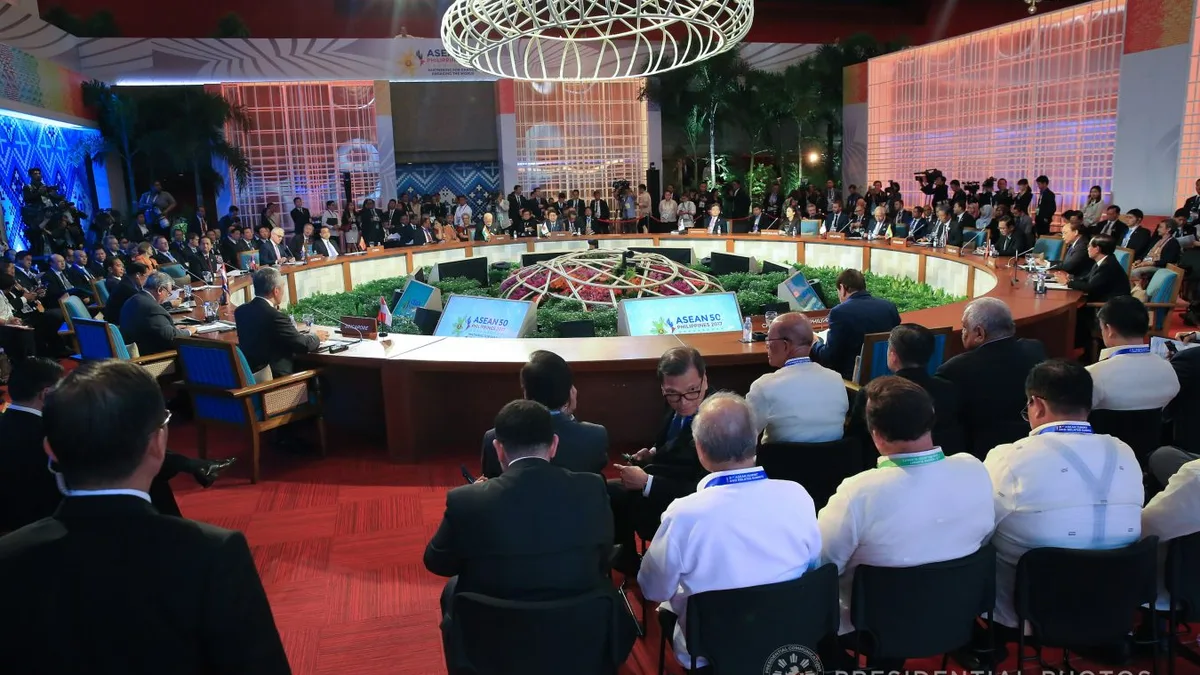
The Regional Comprehensive Economic Partnership (RCEP) originated from a proposal by the Association of Southeast Asian Nations (ASEAN) in the early 2010s. It was conceived as a framework to consolidate the multiple free trade agreements ASEAN had with its six major regional partners. Formal negotiations between the sixteen participating countries were launched in November 2012 during the ASEAN Summit in Cambodia. The negotiation process spanned eight years, facing complexities due to the diverse economic scales and interests of the member states. The agreement was finally signed in a virtual ceremony in November 2020, after India withdrew from the negotiations the previous year. The RCEP agreement entered into force for the first group of ratifying countries on January 1, 2022.
What it is for
RCEP is designed to create a unified, modern free trade area among its member states to streamline trade and investment rules. Its primary purpose is to reduce and eliminate tariff and non-tariff barriers on goods traded within the bloc over a series of phased schedules. A core objective is to establish common rules of origin that allow materials from any member country to be cumulated, making it easier for products to qualify for preferential tariffs. It aims to enhance supply chain efficiency and regional integration by providing more predictable trade and investment conditions. The agreement also seeks to facilitate trade through enhanced customs procedures and cooperation. Furthermore, it includes provisions covering intellectual property, e-commerce, and competition, though it excludes areas like labor and environmental standards commonly found in other modern agreements.
Overview
RCEP is a free trade agreement among fifteen Asia-Pacific nations: the ten ASEAN members plus Australia, China, Japan, South Korea, and New Zealand. It forms the world's largest trade bloc by gross domestic product and population, encompassing nearly a third of global economic activity. The agreement is structured around twenty chapters that cover trade in goods, trade in services, investment, economic and technical cooperation, and dispute settlement. A central feature is its single set of rules of origin, which allows businesses to use a common certificate of origin for all member countries. Tariff concessions are detailed in each member's specific schedule, with many tariffs slated for elimination over twenty years. Unlike other comprehensive agreements, RCEP's commitments on services and investment are often based on positive lists at the agreement's entry, with plans to move to negative lists in the future.
What to know
Businesses must understand that RCEP's tariff benefits are not automatic; importers must claim them using a certified certificate of origin. The rules of origin are generally product-specific, but the regional cumulation provision is a significant advantage for complex supply chains. The agreement does not establish supranational courts or bodies; disputes are handled through state-to-state arbitration mechanisms. Service providers should carefully review each member's specific schedule of commitments, as market access varies significantly by country and sector. Intellectual property provisions establish minimum standards of protection, largely aligning with the WTO's TRIPS Agreement but with some additional obligations. It is critical to consult the legal text and official national guidance, as implementation details and phase-in periods differ for each member country.
Common questions
A common question is how RCEP differs from the Comprehensive and Progressive Agreement for Trans-Pacific Partnership (CPTPP), with the key difference being RCEP's generally lower level of ambition on labor, environment, and state-owned enterprise disciplines. Many exporters ask if they can use RCEP rules alongside other FTAs, which is permissible, requiring a choice of the most advantageous certificate of origin for each shipment. Businesses frequently inquire about the handling of India's absence, noting that the agreement includes a clause allowing for its accession should it decide to join in the future. A typical logistical question concerns the format of the certificate of origin, which can be issued on paper or electronically as per each country's implementation. Importers often ask about proof of origin requirements, which mandate that exporters provide a declaration of origin and supporting documentation. Another recurring question involves the treatment of agricultural products, which often have longer tariff phase-out periods or remain excluded from liberalization in sensitive sectors.
Pros and cons
A significant pro is the simplification and harmonization of trade rules, particularly the single set of rules of origin, which reduces administrative costs for multinational supply chains operating in the region. The agreement also provides improved market access, especially for trade between Japan, China, and South Korea, which did not previously have a trilateral FTA. A major con is the agreement's perceived lower standards, as it lacks enforceable commitments on labor rights, environmental protection, and digital trade, which can disadvantage workers and smaller enterprises. Some businesses regret the complexity of managing multiple, overlapping FTAs in the region, as RCEP does not fully replace existing agreements, potentially adding compliance confusion. A common mistake is for exporters to assume blanket tariff elimination, leading to unexpected duties when products fall outside concession schedules or require stringent origin documentation. Critics argue the agreement could entrench dominant manufacturing positions and lead to trade diversion away from more efficient non-member producers.
Who it suits
RCEP best suits large manufacturers and exporters with established supply chains across multiple member countries, who can maximize benefits from regional cumulation rules. Agricultural and resource exporters from countries like Australia and New Zealand benefit from improved tariff schedules and more secure access to major Asian markets. It is advantageous for ASEAN-based producers aiming to integrate more deeply into regional value chains, particularly in electronics, automotive, and textiles. Service providers in sectors where members have made substantial commitments, such as certain professional, financial, and telecommunications services, will find new opportunities. The agreement suits importers seeking cost-effective sourcing of intermediate goods and components from within the bloc to use in final production. It is less immediately transformative for small and medium-sized enterprises without the resources to navigate the certification procedures or understand the complex product-specific rules.