Ocean Carrier Alliances And Service Loops
Origin and history
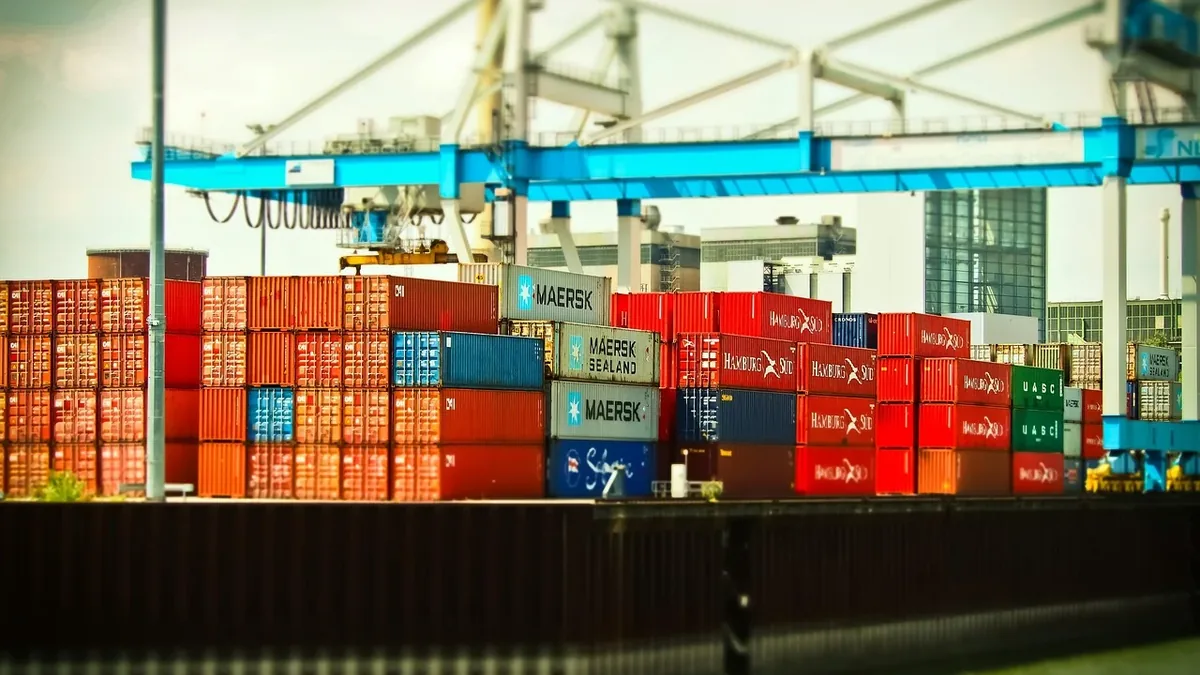
Ocean Carrier Alliances and Service Loops are commercial structures that originated from the global container shipping industry, primarily among carriers based in Europe and East Asia. Their modern form began to solidify in the late 1990s and early 2000s, following the phase-out of restrictive conference systems that had previously governed pricing. The need for greater operational efficiency and capacity management in an increasingly competitive market drove carriers to seek new forms of cooperation. This period saw the formation of the first significant global alliances, which have since undergone multiple cycles of dissolution and realignment. The development of shared service loops, where multiple alliance members contribute vessels to a common sailing schedule, became a cornerstone of these partnerships. These arrangements are distinct from mergers, as they allow legally separate companies to collaborate closely on vessel deployment and network design.
What it is for
Ocean Carrier Alliances and Service Loops are designed to allow competing shipping lines to share vessel capacity and optimize their global network of sailing routes. Their primary purpose is to achieve economies of scale by pooling ships and containers on major trade lanes, such as between Asia and Europe or Asia and North America. This cooperation enables member carriers to offer a wider range of port calls and more frequent sailings than they could feasibly provide independently. The structure is fundamentally aimed at reducing operational costs per container shipped by maximizing vessel utilization and rationalizing port calls. It also serves to mitigate the financial risk associated with deploying the increasingly large and expensive vessels required in modern container shipping. Ultimately, these alliances exist to enhance the service coverage and cost competitiveness of their member carriers in a capital-intensive industry.
Overview
An Ocean Carrier Alliance is a strategic cooperation agreement between multiple container shipping companies, governed by a contract known as a Vessel Sharing Agreement (VSA) or a broader Alliance Agreement filed with regulatory authorities. A Service Loop is the practical manifestation of this cooperation: a fixed, repeating sequence of port calls operated jointly by alliance members using a shared pool of vessels. In a typical loop, each alliance member contributes a certain number of ships to the collective service, and all members can book container slots on every sailing. The operational control of individual vessels remains with their owning carrier, but the sailing schedule and port rotation are coordinated jointly. Alliances are typically organized around key East-West trade routes, with the three major global alliances historically being the 2M, Ocean, and THE Alliances, though membership has evolved. These frameworks are strictly operational and do not involve revenue or profit sharing between the members.
What to know
Alliance agreements and their associated service loops are filed with and monitored by regulatory bodies, such as the U.S. Federal Maritime Commission, to ensure they do not violate competition laws. It is crucial to understand that while carriers cooperate operationally within an alliance, they remain fierce commercial competitors in sales, pricing, and customer service. The specific vessel performing a service loop may change from one week to the next, as carriers substitute different ships from their pooled fleet, which can impact container availability and precise transit times. Alliances collectively control a dominant share of global container shipping capacity, giving them significant influence over market supply and service patterns. Shippers often book with a specific carrier but their container may physically travel on a vessel owned by a different alliance partner. The stability of alliances is not guaranteed, with realignments occurring every few years as carriers reassess their strategic partnerships.
Common questions
A common question is whether alliances lead to price-fixing, but their filed agreements explicitly prohibit discussion or coordination of rates, which remain set independently by each carrier. Many ask how service loops affect reliability, and while they aim to improve frequency, the complexity of coordination can sometimes lead to schedule disruptions that cascade across multiple carriers. Shippers frequently inquire if they can choose which alliance vessel their cargo sails on, but the assignment is an operational decision made by the carrier, not typically a customer option. A recurring question concerns the difference between an alliance and a merger, with the key distinction being that alliances are operational partnerships between independent companies, while mergers result in single corporate ownership. Users often wonder what happens to their booking if an alliance disbands, and in such cases, carriers are obligated to honor existing contracts and transition cargo to their newly arranged services. Another frequent query is about liability, and the governing carrier of the booking remains solely responsible for the entire transit, regardless of which partner's vessel is used.
Pros and cons
A significant pro of the alliance system is the increased frequency of sailings and direct port connections available to shippers, which would be economically unviable for single carriers to provide. It also promotes more efficient use of vessel capacity, which can theoretically reduce per-unit costs and environmental impact through optimized loads. However, a major con is the reduction in meaningful service differentiation between carriers on major routes, as they often share the same network, potentially stifling innovation in transit times or port coverage. The system can concentrate operational risk, where a mechanical failure or schedule delay for one vessel in a shared loop disrupts the schedules of all alliance members simultaneously. A common mistake for shippers is assuming alliance membership implies uniform service quality, when in fact customer service, equipment availability, and digital capabilities vary drastically between partners. Smaller shippers and forwarders sometimes regret the reduced negotiating leverage that comes from a consolidated market where a handful of alliances control most capacity.
Who it suits
This structure primarily suits large, global container shipping lines seeking to manage the enormous capital expenditure and volatile demand cycles of the industry without engaging in full mergers. It is advantageous for carriers with strong regional networks that can be plugged into a broader alliance system to create a seamless global offering. Beneficiaries also include large-volume shippers whose cargo moves on major trade lanes, as they gain access to a dense network of sailings from a single carrier contract. The system suits ports that are selected as key hub or gateway calls within an alliance's service loops, as they benefit from consistent, high-volume cargo flows. Conversely, it is less suited to niche or regional carriers focused on specialized trades where alliance scale is unnecessary, or to shippers whose cargo moves primarily on minor trade lanes not prioritized by alliance networks. Ports omitted from core alliance loops may find themselves at a competitive disadvantage, requiring them to attract services through other means.
Latest Ocean Carrier Alliances And Service Loops news
Latest reporting

FMCSA Issues 3-Month HOS Waiver for Fuel Haulers
The Federal Motor Carrier Safety Administration has granted a nationwide waiver suspending standard Hours of Service rules for drivers transporting...

California, FMCSA clash in court over non-domiciled CDL
California and the Federal Motor Carrier Safety Administration argued before a federal appeals court over the legality of a federal 'pause' on the...
ShipStation Global Launches LTL Service for Small Shippers
ShipStation Global has launched a less-than-truckload product, its first freight expansion since its parent company merger.

Late Peak Demand Drives US Container Spot Rates Higher
Container spot rates to the US surged due to late peak season demand and carrier capacity management, while Asia-Europe rates continued to fall amid

Trailer Bridge, Ports America Sign 10-Year Jones Act
Carrier Trailer Bridge and terminal operator Ports America have entered a 10-year agreement for stevedoring and terminal technology on the...
XPO August tonnage up 3.7%, on track for Q3
XPO reported a 3.7% year-over-year tonnage increase for August, keeping the LTL carrier on pace to meet its third-quarter guidance for a...