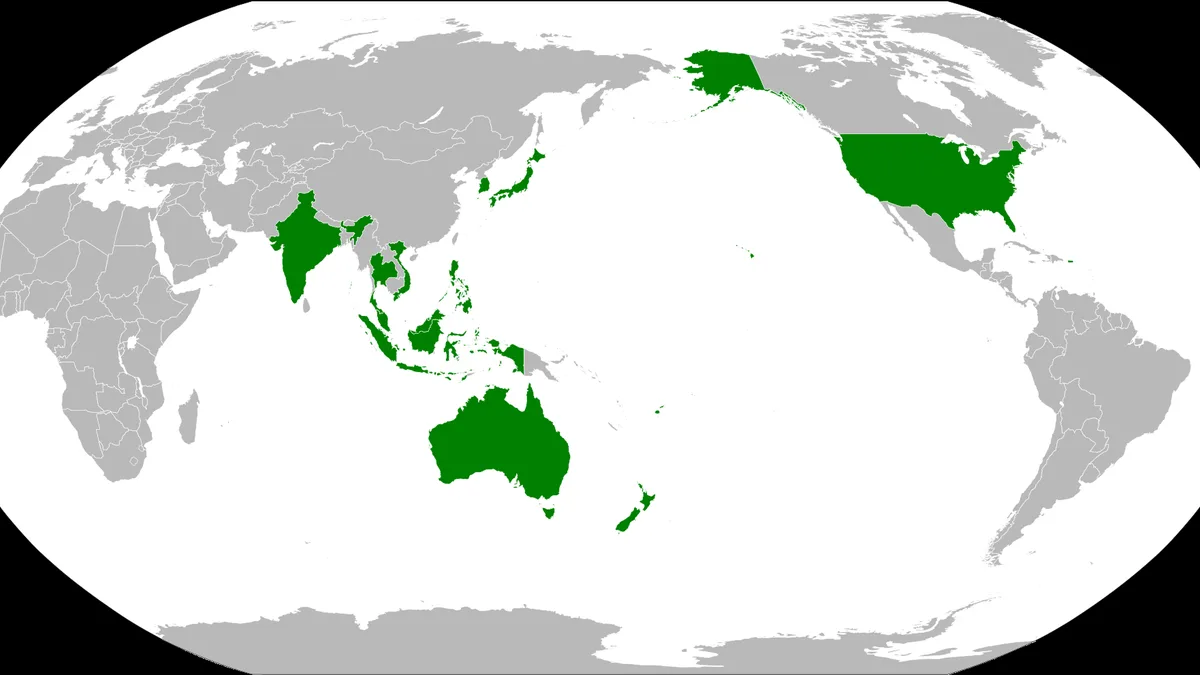
Indo Pacific Economic Framework Supply Chain Agreement
| Agreement | Indo‑Pacific Economic Framework (IPEF) Supply Chain Agreement |
|---|---|
| Original use | To strengthen supply chain resilience and cooperation among partner economies |
| Participating economies | Australia, Brunei Darussalam, Fiji, India, Indonesia, Japan, Republic of Korea, Malaysia, New Zealand, Philippines, Singapore, Thailand, United States, Vietnam |
| Primary legal instrument | Ministerial-level agreement |
| Key mechanisms | Crisis response network, supply chain council, information sharing |
Origin and history
The Indo-Pacific Economic Framework for Prosperity (IPEF) is an economic initiative launched by the United States in the early 2020s. It was formally announced by the U.S. government in 2022 with the participation of multiple partner economies across the Indo-Pacific region. The framework was conceived as a response to evolving economic challenges and the desire to shape regional economic engagement. The Supply Chain Agreement is one of four distinct pillars negotiated under the broader IPEF. This specific agreement was substantially concluded by the member economies in 2023. Its development reflects a concerted effort to create cooperative mechanisms rather than a traditional trade bloc.
What it is for
The IPEF Supply Chain Agreement is designed to enhance resilience, security, and diversification of critical supply chains among member countries. Its primary purpose is to prevent and mitigate supply chain disruptions, which became a prominent global concern following events like the COVID-19 pandemic. The agreement aims to move away from over-concentration in single sources or regions for essential goods. It establishes formal structures for cooperation during crises, including early warning systems and information sharing. A key function is to facilitate investment in supply chain infrastructure and workforce development. Ultimately, it seeks to foster integrated planning to ensure the stable flow of key products, such as semiconductors and critical minerals.
Overview
The agreement is a legally non-binding arrangement that establishes a collaborative governance structure among partner economies. It creates three main institutional bodies: a Supply Chain Council, a Crisis Response Network, and a Labor Rights Advisory Board. The Supply Chain Council is tasked with identifying critical sectors and key goods for cooperative action. The Crisis Response Network serves as a communication channel to respond immediately to potential disruptions. The agreement includes commitments to improve logistics and infrastructure connectivity. It also incorporates labor rights provisions aimed at promoting fair labor standards within member supply chains.
What to know
Member countries are not required to lower tariffs or provide market access under this agreement, distinguishing it from conventional trade pacts. The focus is on regulatory cooperation, transparency, and joint investments rather than on preferential tariff treatment. The agreement covers a wide range of sectors deemed critical, including energy, technology, and healthcare materials. Implementation relies on voluntary actions and shared objectives rather than enforceable dispute settlement mechanisms. Businesses should understand that its impact will be felt through changed government procurement policies, investment facilitation, and supply chain mapping exercises. The success of the agreement hinges on the continued political will and resource commitment of all participating economies.
Common questions
A common question is whether this agreement will directly change tariff rates on imported goods, and the answer is that it does not mandate any tariff changes. Many inquire about which countries are involved, with the current partners including the United States, Japan, Australia, India, South Korea, and numerous Southeast Asian nations, though not all have signed every pillar. People often ask how it differs from the Comprehensive and Progressive Agreement for Trans-Pacific Partnership (CPTPP), with the key difference being IPEF's lack of market access commitments. Businesses commonly seek to know how to engage with the new structures, which will likely occur through government-led consultations and potential public-private dialogues. Individuals also ask about the agreement's relationship to geopolitical tensions, as it is widely viewed as part of a strategy to provide an alternative to economic models offered by other major regional powers.
Pros and cons
A significant pro is the creation of a formal, multilateral forum dedicated solely to supply chain coordination, which can lead to faster crisis response and more diversified sourcing options for businesses. The agreement's sector-specific focus allows for targeted action in areas vital to economic security. However, a major con is its non-binding nature, which risks creating a "talk shop" without guaranteeing substantive action or investment from all members. Some member governments may regret joining if the commitments require substantial domestic regulatory changes without clear, immediate economic benefits. A common mistake is for stakeholders to overestimate the agreement's short-term impact, as building resilient supply chains requires long-term, costly investments in infrastructure and skills. The labor rights components, while a pro for worker advocacy, could be seen as a con by firms operating in jurisdictions with less stringent standards, potentially creating compliance friction.
Who it suits
This agreement primarily suits governments and policymakers seeking to de-risk their economies from supply shocks without entering into a traditional free trade agreement. It is well-suited for large multinational corporations with complex, region-spanning supply chains that would benefit from greater regulatory predictability and government-backed diversification initiatives. Industries reliant on critical raw materials, advanced technology, and medical products are the most direct beneficiaries. The structure suits economies that wish to maintain sovereignty over their trade tariffs while still engaging in deep economic cooperation. It is less suited for businesses or sectors that operate purely domestically or that were hoping for immediate tariff reductions to lower costs. The agreement also suits economies looking to balance economic engagement with strategic objectives, as it allows for coalition-building on shared non-tariff priorities.
Latest Indo Pacific Economic Framework Supply Chain Agreement news
Latest reporting

Copeland Acquires Dickson for Healthcare Cold Chain
Copeland has acquired Dickson, a provider of cloud-based temperature monitoring technology, to strengthen its portfolio for the healthcare and life
STB Member Criticizes Union Pacific-Norfolk Southern Merger
A Surface Transportation Board member called the Union Pacific-Norfolk Southern merger application 'shallow' and lacking detail, even as the board...
Global Diesel Supply Falls 8% on Russian and Middle East
Simultaneous refinery attacks in Russia and supply disruptions in the Middle East have removed roughly 2 million barrels per day of diesel from global

Union Pacific CEO Criticizes Rival Railroads' Merger Demands
Union Pacific CEO Jim Vena has sharply criticized rival railroads' requests for extensive trackage rights as a condition for approving UP's proposed...
Trailer Bridge, Ports America Sign 10-Year Jones Act
Carrier Trailer Bridge and terminal operator Ports America have entered a 10-year agreement for stevedoring and terminal technology on the...
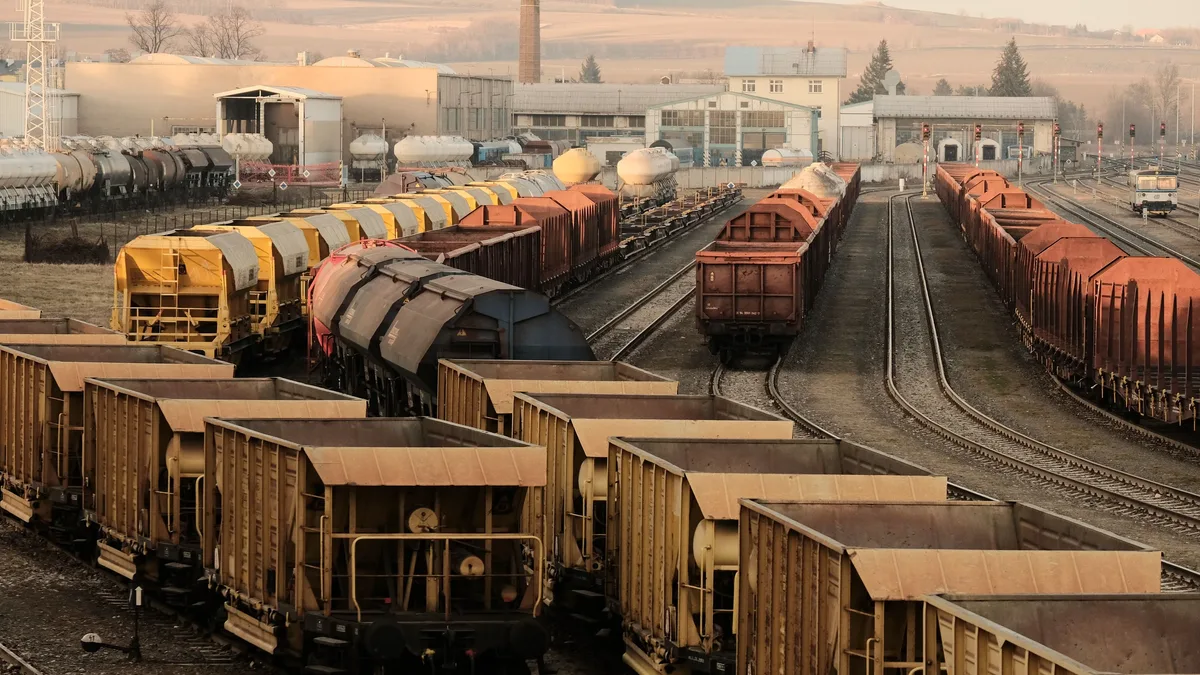
TrinityRail: 200,000 Railcar Retirements Drive Demand
TrinityRail's Charley Moore says 200,000 North American railcars are nearing retirement, creating a supply crunch as lease utilization hits the high...