South Korea
| Official name | Republic of Korea |
|---|---|
| Capital city | Seoul |
| Official language | Korean |
| Currency | South Korean won (KRW) |
| Major export categories | Semiconductors, automobiles, refined petroleum, ships, wireless communication equipment |
| Major import categories | Crude petroleum, natural gas, semiconductors, coal, petroleum gas |
| Primary trade agreement | Korea–United States Free Trade Agreement (KORUS FTA) |
| WTO membership status | Member since 1995 |
Overview
South Korea, officially the Republic of Korea, is a nation located on the southern portion of the Korean Peninsula in East Asia. Its modern trade profile is defined by its transformation from a war-torn agrarian economy into a leading global exporter of advanced manufactured goods and technology. The country's trade policy is fundamentally shaped by its network of free trade agreements (FTAs), which systematically alter tariff lines to provide preferential market access for its key exports. These agreements are central to the strategy of its export-oriented economic model, often described as the "Miracle on the Han River." South Korea's major export sectors include semiconductors, automobiles, refined petroleum products, ships, and wireless communication equipment. Its primary trading partners are China, the United States, Vietnam, and Japan, reflecting deep integration into both regional and global supply chains.
History
The modern South Korean state originated from the division of the Korean Peninsula following World War II and the Korean War, formally established in 1948. Its early trade history in the mid-20th century was characterized by protectionist policies aimed at rebuilding a devastated economy and fostering domestic industries through import substitution. Beginning in the 1960s, the government shifted decisively toward export-led industrialization, directing resources and credit to strategic sectors like heavy chemicals and manufacturing. This period saw the rise of large family-controlled conglomerates known as *chaebol*, such as Hyundai and Samsung, which became the engines of export growth. South Korea's accession to the General Agreement on Tariffs and Trade (GATT) in 1967 marked its initial formal integration into the multilateral trading system. A pivotal historical development was its recovery from the Asian Financial Crisis of 1997-98, which prompted significant corporate and financial reforms and reinforced a commitment to open trade as a pathway to economic resilience.
How it works today
South Korea's trade regime today operates under a dual structure of World Trade Organization (WTO) Most-Favored-Nation (MFN) rates and an extensive web of preferential FTAs. A specific tariff line, such as for passenger vehicles or memory chips, will have a statutory MFN rate, but this rate is often reduced to zero for imports from or exports to FTA partner countries. For example, the Korea-U.S. Free Trade Agreement (KORUS FTA), implemented in 2012, eliminated tariffs on over 95% of bilateral trade in industrial and consumer goods within a set timeline. The country's customs authority administers strict rules of origin to determine whether goods qualify for these preferential rates, requiring detailed documentation from importers and exporters. South Korea continues to actively negotiate and upgrade FTAs, with agreements spanning from the ASEAN bloc and the European Union to regional pacts like the Regional Comprehensive Economic Partnership (RCEP). This complex network means a single product's applicable tariff is entirely dependent on its origin and the specific agreement in force with the trading partner.
Why it matters
South Korea's trade profile matters because it exemplifies how a resource-limited nation can achieve advanced economic status through strategic integration into global trade. Its success demonstrates the potential of targeted industrial policy combined with progressive trade liberalization to create world-leading competitive sectors. The stability of its supply chains for critical components like semiconductors and display panels is vital to global technology and automotive industries, making disruptions in Korean exports felt worldwide. Furthermore, the country's FTAs often serve as high-standard templates for other agreements, influencing global norms on digital trade, intellectual property, and competition policy. For businesses, understanding the specific rules of origin under Korea's FTAs is essential for accessing its market competitively or utilizing it as an export platform. On a geopolitical level, South Korea's trade relationships must carefully balance its deep economic ties with China and its security alliance with the United States, making its trade policy a barometer for regional dynamics.
Common misconceptions
A common misconception is that South Korea's economic success is solely the result of unrestricted free trade; in reality, its development involved decades of significant government direction, protection of nascent industries, and strategic sequencing of market opening. Another error is viewing its trade surplus as a sign of closed domestic markets, while overlooking structural factors like high household debt that suppress import consumption and the capital-intensive nature of its major export industries. Many assume that all products labeled "Made in Korea" automatically qualify for FTA benefits, not understanding that complex rules of origin based on value-added or specific processing requirements must be met. There is also a tendency to oversimplify its trade relationship with China as purely complementary, ignoring the growing competitive overlap in areas like semiconductors and displays where Korean firms face direct challenges. Finally, some believe South Korea's trade policy is insulated from geopolitical tensions, but events like historical disputes with Japan have directly impacted trade flows through export controls on key industrial materials.
Latest South Korea news
Latest reporting
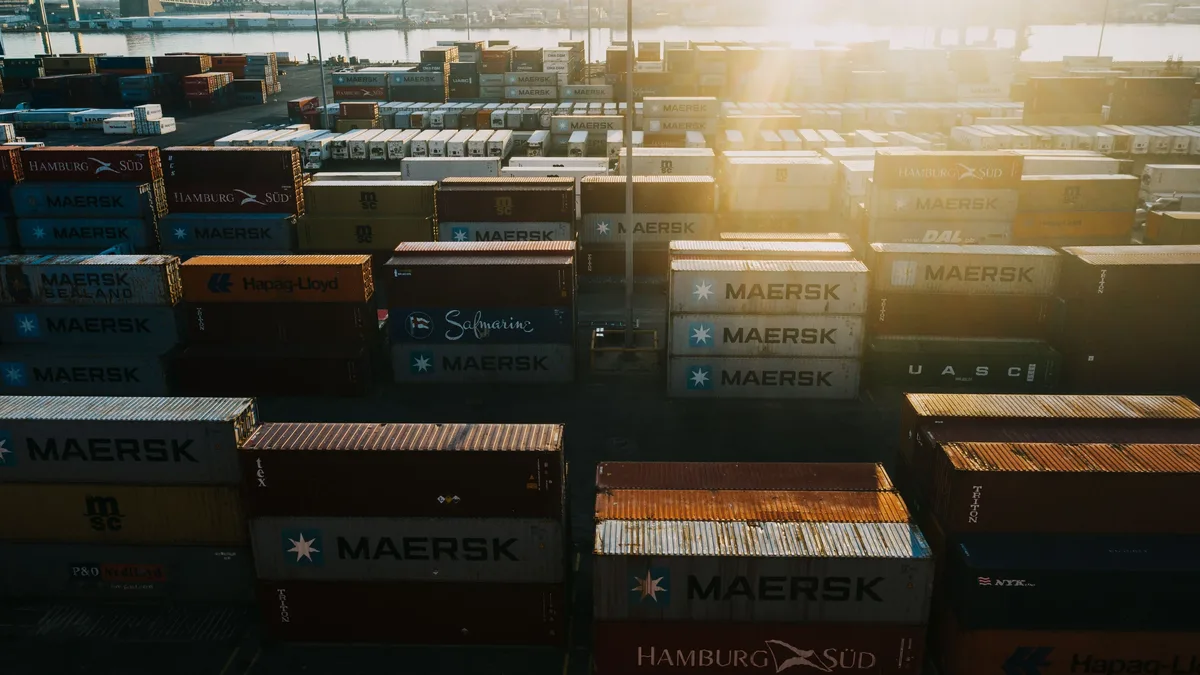
South-South Trade Growth Accelerates, Reshaping Global Dynamics
South-South merchandise exports reached USD 7.2 trillion in 2025, accounting for 27.8% of world exports, having grown nearly twice as fast as...
ASEAN 2026 Defense Summit in Cebu to Address South China Sea
ASEAN will hold its 2026 defense ministers' summit in Cebu, Philippines, with maritime territorial disputes set to dominate the agenda as the bloc...
ROK Outlines ASEAN Partnership Vision
South Korea's ambassador to ASEAN briefed the Committee of Permanent Representatives on a new vision for the ASEAN-ROK Comprehensive Strategic...
China maps South China Sea floor with higher resolution
Chinese researchers have produced seabed maps of the South China Sea with twice the resolution and up to five times the accuracy of existing global...
CMA CGM delays Panama Canal surcharge
CMA CGM delays a $150 per teu Panama Canal surcharge for South American west coast cargo. New restrictions from September will sharply cut vessel...