Malaysia
| Capital | Kuala Lumpur (administrative), Putrajaya (federal government) |
|---|---|
| Currency | Malaysian ringgit (MYR) |
| Major trade agreements | ASEAN Free Trade Area (AFTA), Comprehensive and Progressive Agreement for Trans-Pacific Partnership (CPTPP) |
| Major export sectors | Electrical & electronic products, petroleum & liquefied natural gas, palm oil |
| Major import sectors | Electrical & electronic products, machinery & equipment, chemicals |
| Tariff nomenclature | ASEAN Harmonized Tariff Nomenclature (AHTN) |
| Governing trade body | Ministry of Investment, Trade and Industry (MITI) |
| Time zone | Malaysia Time (MYT), UTC+8 |
Overview
Malaysia is a sovereign nation located in Southeast Asia, comprising two distinct regions: Peninsular Malaysia and the states of Sabah and Sarawak on the island of Borneo. Its trade profile is defined by its strategic position along major global shipping routes and its status as a robust, export-oriented economy. Key exports include electrical and electronic products, petroleum and liquefied natural gas, palm oil and related products, chemicals, and machinery. The country's trade policy is fundamentally shaped by its membership in the World Trade Organization (WTO) and a complex network of bilateral and regional free trade agreements. Understanding a specific tariff line for a good imported into or exported from Malaysia requires examining both the national customs tariff and the applicable trade agreement that may alter that base rate. This framework determines the final duty payable, influencing the cost structure for businesses and the competitiveness of Malaysian goods abroad.
History
The modern nation of Malaysia originated from a federation of former British territories, gaining independence as the Federation of Malaya in 1957 and subsequently forming Malaysia with Singapore, Sabah, and Sarawak in 1963. Its early post-independence economy was heavily reliant on primary commodities such as rubber and tin. A pivotal shift began in the 1970s with the implementation of the New Economic Policy and a concerted drive towards industrialization, which laid the groundwork for its export-led growth model. Malaysia's engagement with multilateral trade systems deepened, and it became a founding member of the WTO's predecessor, the General Agreement on Tariffs and Trade (GATT), in 1957. The late 20th and early 21st centuries saw Malaysia actively pursuing preferential trade agreements, starting with ASEAN Free Trade Area (AFTA) in 1992, to secure market access and integrate into regional supply chains. This historical trajectory transformed the country from a commodity exporter into a manufacturing and trading hub with a diversified export basket.
How it works today
Today, Malaysia's tariff schedule is administered by the Royal Malaysian Customs Department, with the base rates for goods defined under the ASEAN Harmonized Tariff Nomenclature (AHTN). The applicable duty for an imported item is not static but is determined by its classification and the rules of origin under any relevant trade agreement. For instance, a product imported from another ASEAN member state under the ASEAN Trade in Goods Agreement (ATIGA) typically receives a zero tariff, provided it meets the stipulated rules of origin. Similarly, imports from countries like Japan, Australia, or Pakistan may be subject to reduced or eliminated duties under respective bilateral agreements such as the Malaysia-Japan Economic Partnership Agreement or the ASEAN-Australia-New Zealand Free Trade Agreement. Exporters must obtain a certificate of origin to claim these preferential rates, requiring documentation that proves the good's production meets the specific agreement's criteria. This system creates a layered landscape where a single tariff line can have multiple possible rates, depending entirely on the trade agreement pathway utilized.
Why it matters
Malaysia's trade agreements and tariff structures directly impact global supply chain decisions, influencing where multinational corporations choose to establish manufacturing bases for electronics, medical devices, and other high-value goods. The preferential access granted by these agreements lowers costs for importers of Malaysian products in partner countries, enhancing the competitiveness of key exports like palm oil, rubber gloves, and semiconductor components. For Malaysian consumers and industries, these agreements reduce the cost of imported raw materials, capital goods, and intermediate products, which can lower production costs and final consumer prices. The system also matters for trade compliance, as misclassifying a good or incorrectly applying a rule of origin can lead to significant back-duty payments, penalties, and supply chain disruptions. Furthermore, the network of agreements strategically positions Malaysia within regional economic blocs like ASEAN and the Comprehensive and Progressive Agreement for Trans-Pacific Partnership (CPTPP), shaping its economic diplomacy and long-term growth prospects.
Common misconceptions
A common misconception is that all goods traded between countries with a free trade agreement automatically qualify for zero tariffs, when in fact strict and often complex rules of origin must be satisfied to prevent tariff circumvention. Another error is assuming Malaysia's trade policy is uniform, whereas different agreements contain unique provisions, exclusions, and phase-out schedules for sensitive products, meaning a tariff concession in one pact may not exist in another. Some believe that Malaysia's export economy is solely dependent on electronics and palm oil, overlooking the significant and growing contributions of sectors like aerospace, medical technology, and business services. It is also incorrect to view tariff elimination as the sole benefit of trade agreements, as they also cover critical non-tariff areas like technical standards, sanitary measures, and intellectual property that profoundly affect market access. Finally, there is a misconception that these agreements only benefit large corporations, while in reality small and medium-sized enterprises that navigate the certification processes can gain crucial competitive advantages in regional markets.
Latest Malaysia news
Latest reporting

King's pardon for Najib Razak faces legal dispute over fine payment
Malaysia's king affirmed his conditional pardon for former PM Najib Razak is clear, but the Attorney-General's Chambers suspended house arrest over...
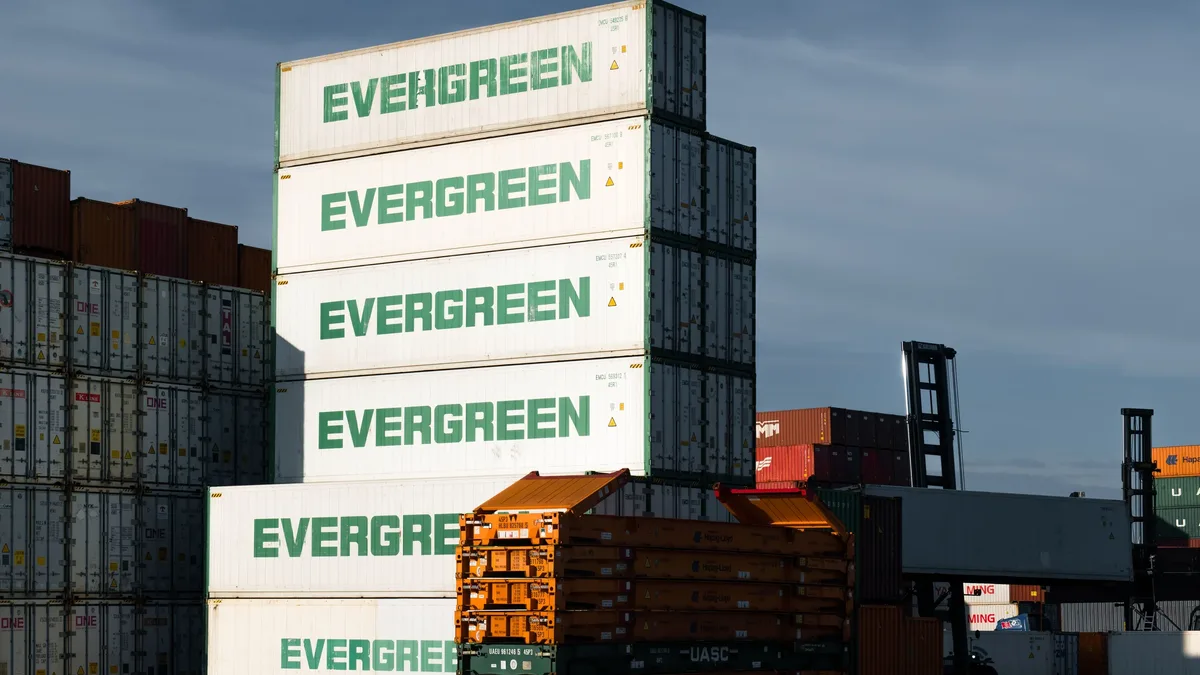
Singapore, Malaysia coordinate containership fire response
Singapore, Malaysia, Indonesia announced a coordinated response to containership fires yesterday at the 17th Cooperation Forum. The initiative...